

Storytelling’s Powerhouse: How Narratives Transform OOH into Emotional Brand Magnets
Meta description: Delve into how masterful storytelling elevates out-of-home campaigns, forging deep emotional bonds with audiences and boosting brand loyalty through real-world examples and strategies. (148 chars)
In the relentless barrage of daily advertising, out-of-home (OOH) campaigns stand out by harnessing the timeless art of storytelling to pierce through the noise. Unlike static messages or fleeting digital ads, compelling narratives in OOH create visceral emotional connections, turning passive passersby into loyal advocates. This fusion of narrative craft and physical presence not only captures attention but drives measurable brand loyalty, as evidenced by iconic campaigns that linger in collective memory.
At its core, storytelling in OOH leverages human psychology: people remember stories 22 times more than facts alone. Emotional resonance is the linchpin. By evoking feelings like nostalgia, triumph, or humor during commutes or urban strolls—moments ripe for escapism—OOH ads tap into varied daily emotions far more effectively than indoor media. Consider Nike’s enduring “Just Do It” ethos, splashed across billboards. It doesn’t just sell shoes; it narrates a hero’s journey of overcoming obstacles, positioning the brand as the enabler of personal victory. This simple yet profound tale has cemented Nike’s identity, proving how a narrative arc—conflict, resolution, aspiration—fosters relatability and recall.
Crafting these stories demands precision, given OOH’s inherent constraints: brief exposure times, vast scales, and dynamic locations. Simplicity reigns supreme. Experts advise stripping narratives to essentials—clear heroes, minimal text, bold visuals—that register in seconds. Know your audience intimately: their pains, desires, and daily rhythms. Tailor the tale accordingly, whether inspiring gym-goers via place-based mall displays or comforting commuters with transit ads evoking warmth. Visuals amplify this; a single evocative image can convey conflict and catharsis faster than words, aligning perfectly with OOH’s glanceable format.
Conflict injects tension, the engine of engagement. Present a challenge—urban isolation, daily grind—and resolve it through the brand. This mirrors classic story structures, making audiences the protagonists who “win” by choosing your product. Emotions seal the deal: humor for levity, shock for jolt, inspiration for uplift. Yet authenticity matters; inauthentic ploys falter in OOH’s public scrutiny. End with a frictionless call to action—QR codes, hashtags, or geofenced mobile prompts—that bridges the physical ad to digital action, extending the story’s life.
Digital out-of-home (DOOH) supercharges this intersection. Programmable screens enable sequential messaging, where narratives unfold across a journey: teaser on a highway billboard, climax at a transit hub, payoff via retargeted mobile. Coca-Cola’s #ShareACoke masterfully wove billboards into social sharing, sparking over 500,000 user posts by inviting audiences into the narrative. Pepsi’s AR billboards transformed static views into interactive games, ballooning engagement from seconds to minutes. These innovations turn constraints into opportunities—size for impact, location for context, time for relevance—yielding 43% higher ad resonance through real-time tweaks like weather-tied tales.
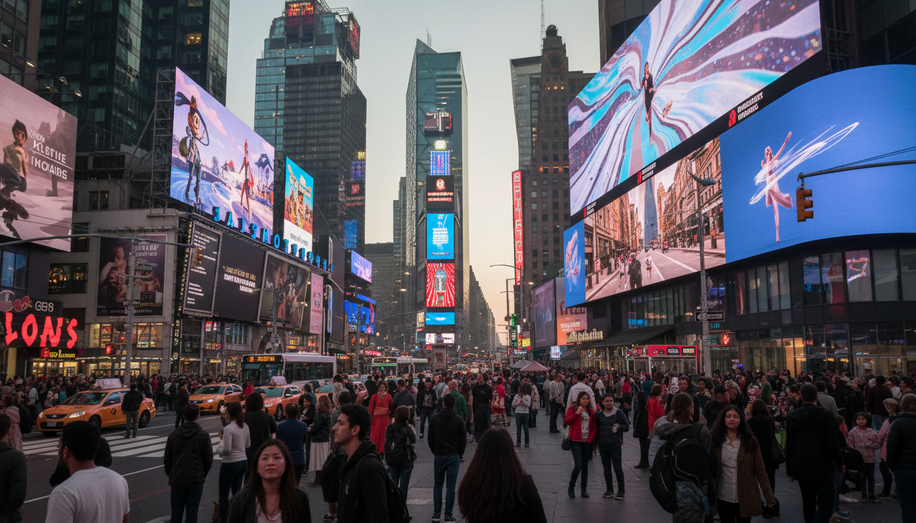
Real-world successes underscore the loyalty payoff. Beyond Nike, brands like American Eagle used beacons in Times Square to track 25% uplift in engagement, blending storytelling with data to retarget exposed viewers, hitting 3.9x conversion rates. Hyperlocal DOOH in gyms or elevators delivers micro-narratives tied to moments—post-workout triumph or elevator small talk—fostering repeated emotional hits that build habit. Voice-activated displays and AI even personalize tales, responding to queries for a conversational arc that feels intimate amid crowds.
Yet storytelling’s magic in OOH isn’t accidental; it’s strategic. Integrate with omnichannel paths: consistent visuals across static billboards, transit wraps, and ambient projections ensure the narrative coheres. Mobile geofencing captures who saw the ad, retargeting with story continuations. Hashtags and UGC displays loop audiences back, amplifying reach organically. Frequency matters too—repeated exposures during commutes etch stories into memory, outperforming one-offs.
Critics might decry OOH’s brevity as a limiter, but visionaries flip it: these bounds force sharper, bolder tales. In a fragmented media landscape, OOH’s ubiquity—85% of adults encounter it regularly—positions stories for mass intimacy. The result? Brands don’t just advertise; they embed in cultural fabric, driving loyalty through shared emotional journeys.
As OOH evolves with AI, AR, and programmatic precision, storytelling remains the soul. It elevates campaigns from interruptions to inspirations, proving that in advertising’s arena, the best narratives don’t sell—they connect, endure, and convert.