

Art Meets Technology: Digital Artists Powering the Next Wave of Captivating OOH Campaigns
Digital artists are revolutionizing out-of-home advertising by blending cutting-edge tech like AI and dynamic displays with brands, creating billboards that captivate urban audiences and drive engagement beyond traditional ads.
In the bustling streets of major cities, where attention spans flicker like neon lights, out-of-home (OOH) advertising is undergoing a profound transformation. Digital artists, armed with tools like artificial intelligence, machine learning, and real-time data visualization, are collaborating with brands to craft campaigns that don’t just sell products—they command attention, spark conversations, and embed themselves into the cultural fabric. This fusion of art and technology turns static billboards into living canvases, proving that innovation in OOH lies at the intersection of creativity and code.
Consider Refik Anadol, a pioneering new media artist whose work exemplifies this shift. In 2023, Anadol partnered with Artsy and Orange Barrel Media to showcase AI-generated visuals across Los Angeles digital billboards. By training machine-learning algorithms on datasets like wind patterns and Bluetooth signals, he produced mesmerizing, immersive moving images that pulsed with sensory depth. These weren’t mere ads; they were hypnotic experiences that blurred the line between advertising and high art, drawing passersby into a digital dreamscape. Such collaborations highlight how digital artists leverage technology to create visuals that evolve in real time, far surpassing the limitations of traditional design.
This trend extends to digital out-of-home (DOOH) networks, where screens respond dynamically to their environment. In Atlanta, the “Extension of Nature” exhibit commandeered downtown digital billboards for an art intervention organized by curator Birney Robert. Ten artists contributed short, looping videos exploring themes like plants, plastics, and imaginary environments, sandwiched between commercial ads. Works like Chanell Angeli’s “Soul Mother” injected a human touch into the urban grind, using motion and stillness to carve out “breathing room” amid the chaos. By repurposing commercial space for planetary contemplation, the project demonstrated how digital artists can reorient OOH from sales pitches to provocative public art.
Brands are quick to capitalize on this potential. Apple’s “Shot on iPhone” campaign integrated local photographers and digital artists to produce location-specific billboards featuring authentic community imagery, fostering resonance that felt organic rather than imposed. Converse took it further with “City Forests,” enlisting muralists to design billboards coated in air-purifying paint, merging digital artistry with environmental activism across multiple cities. These efforts not only stand out visually but amplify through social media, PR, and earned media, turning a single billboard into a viral phenomenon.
The advantages are clear and measurable. Digital artist collaborations deliver visual distinction in a sea of templated ads, sparking Instagram-worthy moments that encourage sharing. They build community credibility by aligning with local creatives who embody cultural relevance, earning trust that stock imagery can’t match. Moreover, tech integration—like weather-responsive displays in the British Skin Foundation’s “Burnable Billboard” PSA—creates contextual relevance. This DOOH stunt, triggered by high UV forecasts via APIs, “burned” on screens to warn of sun damage, generating 57 media stories, 14 million impressions, and coverage on BBC and ITV worth over $180,000.
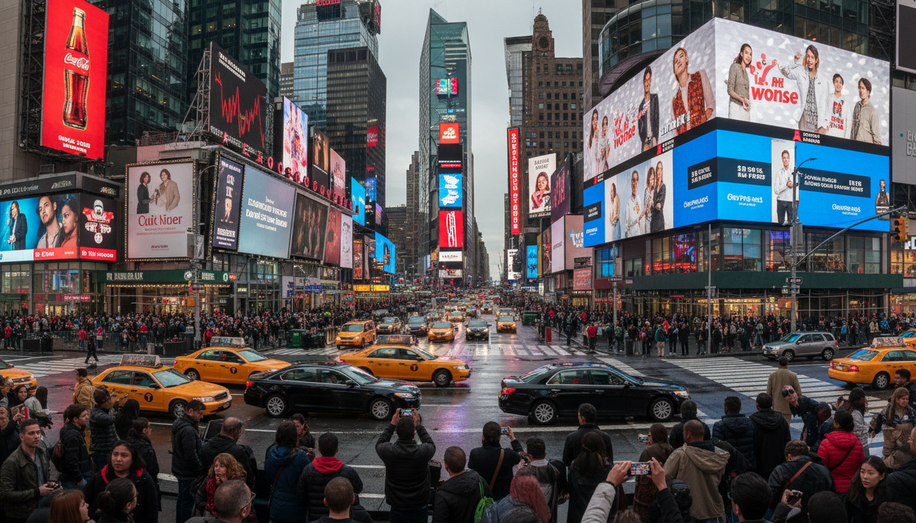
In Lansing, the Arts Council of Greater Lansing’s Billboard Project partners with Adams Outdoor Advertising to rotate juried digital art from area artists across regional screens. This “rotating gallery” has become a landscape staple, boosting artist awareness and attracting visitors with its collective appeal. Similarly, Times Square’s Midnight Moment donates prime billboard space nightly for three-minute artist showcases, 364 nights a year, courtesy of operators who see value in elevating OOH to cultural event status.
What makes these partnerships thrive? Successful campaigns treat artists as co-strategists, not hired hands. Brands select digital creators whose styles and values sync with their voice, defining core messages while leaving room for innovative storytelling. Tech-savvy agencies like DashTwo emphasize data-driven strategies, blending OOH’s massive reach with digital dynamism for cost-efficient, memorable impact. The result: stronger emotional engagement, positive perceptions among values-driven consumers, and long-term equity as billboards evolve into murals of culture and shared values.
Yet challenges persist. Short video loops must compete with glitzier ads, demanding mastery of motion to hold fleeting glances. Ethical considerations arise too—AI art prompts debates on authorship, though artists like Anadol push boundaries responsibly. Still, with global DOOH spend projected at $19 billion in 2025, the momentum is undeniable. Campaigns that break patterns, leverage real-time data, and forge emotional ties are redefining OOH as experiential art.
Looking ahead, expect more hybrid innovations: 3D billboards like those at trail-running events, morphing installations, and AR integrations that bridge physical screens to mobile devices. Public health initiatives in Atlanta and Detroit already use digital artist billboards for voting and vaccination drives, proving versatility across sectors. As effortlessoutdoormedia.com notes, these aren’t just ads—they’re cultural moments that connect, inspire, and endure.
Digital artists are the architects of this evolution, wielding technology to make OOH unmissable. In a world oversaturated with digital noise, their work reminds us that the most powerful ads feel like art—bold, human, and alive.