
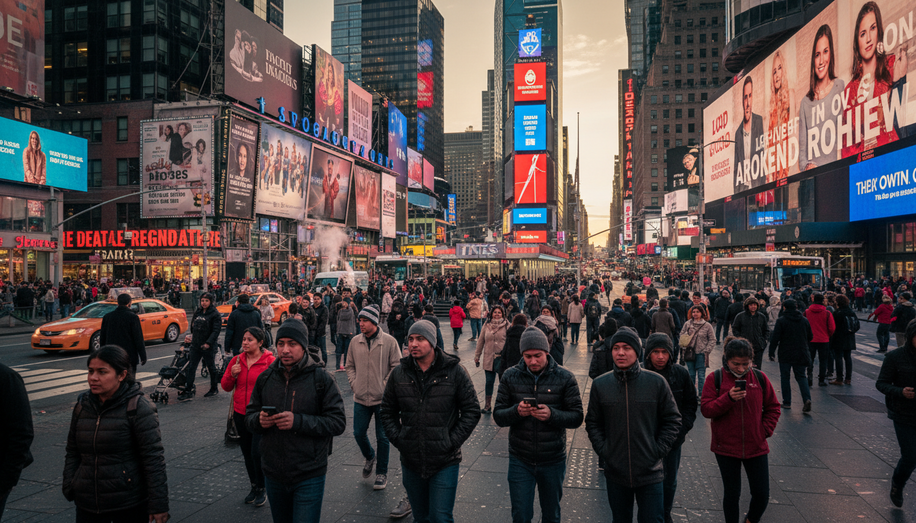

Integrating OOH Advertising with Mobile App Engagement
Meta description: How brands are fusing OOH and mobile apps with geofencing, QR codes, AR and retargeting to turn passive views into interactive, loyalty‑building journeys.
Out-of-home has always excelled at reach and salience; mobile apps excel at intimacy and data. The frontier for marketers is the space where these two collide, transforming a fleeting billboard glance into a measurable, app-driven relationship.
Across categories, advertisers are discovering that when OOH and mobile work in tandem, performance lifts are dramatic. Smartphone click-through rates can rise by 15–40% after exposure to related OOH placements, as physical ads prime awareness that mobile then converts into action. McDonald’s reported a 23.6% increase in store visits and an 8:1 return on ad spend by pairing highway billboards with geofenced mobile ads. Burger King’s “Detour” campaign, which unlocked app offers near rival restaurants, drove 1.5 million app downloads in three months using the same principle.
At the heart of these results is a simple idea: use OOH to frame the moment, then use the phone to complete the journey.
The most direct link between a poster and a phone remains the humble QR code. It is now a gateway to app experiences rather than just mobile sites. Brands are using OOH to promote app-exclusive offers, with QR codes that deep-link into specific app screens—sign-up flows, product pages, loyalty dashboards or limited-time rewards. A retail chain, for example, can push commuters from a billboard into its app’s store locator and coupon wallet, capturing both intent and installs in the same interaction. Short, memorable URLs serve as a backup, but frictionless scanning is what keeps the path within two taps, a key threshold for sustained engagement.
Geofencing adds another powerful layer by extending the OOH moment into an ongoing conversation. By drawing virtual perimeters around billboards, transit shelters or street-furniture clusters, advertisers can retarget exposed devices with app-focused messages as soon as they move through the area. That might mean a push to download the app, a reminder to complete a basket, or a contextual prompt—“You’re five minutes from our store; tap to order ahead”—that turns awareness into immediate behavior. Location data partners can then attribute app installs, in-app actions and store visits back to specific OOH locations, closing the loop between impression and outcome.
The same infrastructure supports more sophisticated sequential storytelling. Rather than repeating the same creative from billboard to banner, brands are building narratives that unfold across touchpoints and time. Burberry demonstrated this with synchronized urban DOOH and social content, delivering different creative as people moved through the city and into digital spaces, lifting brand preference and purchase consideration. In app-led campaigns, the OOH asset may introduce a brand promise, while follow-up mobile ads reveal deeper product benefits, user-generated content or loyalty mechanics. Consistent visual identity across formats keeps recall high, but messaging is tailored to what each screen does best.
Augmented reality is pushing this integration into more immersive territory. DOOH and static OOH are becoming AR triggers that unlock interactive worlds inside brand apps. Pepsi’s AR billboards, which morphed into game-like experiences when viewed through a mobile lens, stretched engagement time from seconds to minutes and turned spectators into participants. For app owners, these interfaces double as on-boarding and education tools, teaching features or surfacing rewards in a context that feels more like entertainment than advertising.
Behind the scenes, measurement is finally catching up with the creative ambition. Mobile attribution and anonymized device graphs allow marketers to see how many people scanned a QR code, installed an app, registered, completed a purchase or walked into a store after encountering an OOH placement. Unique deep links, app-specific QR codes and campaign landing screens make it possible to distinguish between organic and OOH-driven activity. Some out-of-home specialists report that combining OOH with coordinated digital and mobile messaging can increase reach by more than 300% versus using either channel alone, while improving frequency and relevance in the same locations.
For brands focused on loyalty rather than pure acquisition, the OOH–app bridge is becoming an engine for repeat behavior. OOH can spotlight member-only perks, tiers and seasonal challenges, while the app houses the mechanics—points, badges, personalized offers. Location-based messaging ensures that the benefits promoted on the street match the immediate context: a coffee chain might push double points within walking distance of a store, or a retailer could highlight curbside pickup in areas with heavy drive-time traffic. The creative task is to communicate a clear value exchange: scan or download now for something meaningfully better than what non-app users receive.
Privacy expectations are reshaping how all of this is executed. Advertisers are leaning on consented data, clear disclosures and value-first propositions to justify the interplay between OOH exposure and mobile targeting. In practice, that means designing app journeys that offer obvious utility—saving money, saving time, or delivering entertainment—rather than obscure data grabs in exchange for vague “personalization.”
As consumer attention fragments, the campaigns cutting through are those that recognize people move fluidly between physical and digital environments. OOH still provides the mass canvas and cultural presence; mobile apps now provide the depth, interactivity and attribution. The brands that integrate the two most effectively are not just driving incremental clicks and installs; they are building always-on, location-aware relationships that start on the street and live in the palm of the consumer’s hand.