

AI-Powered Content Creation for OOH Ads: Revolutionizing Creative Processes
Discover how AI is automating design, generating hyper-personalized messages, and enabling real-time optimization in out-of-home advertising, transforming static billboards into dynamic, data-driven powerhouses. (148 characters)
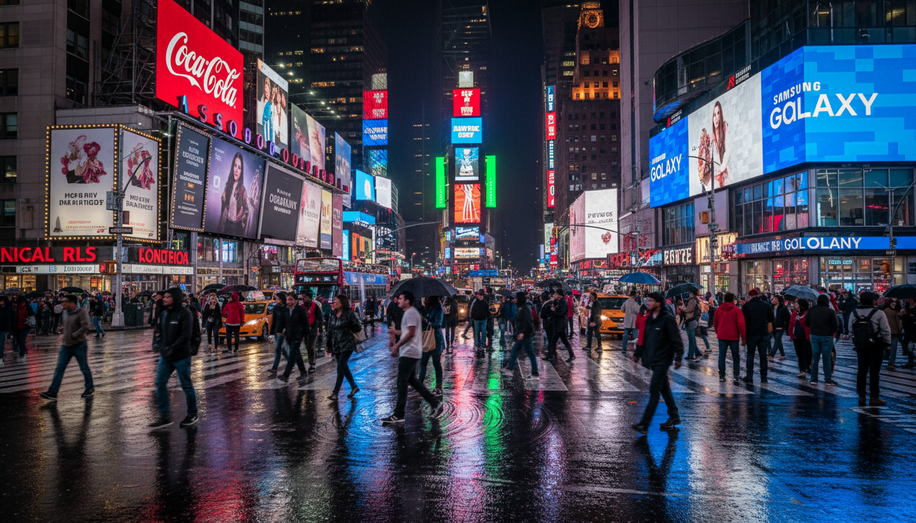
Artificial intelligence is reshaping out-of-home (OOH) advertising by automating content creation from design to delivery, enabling brands to produce thousands of personalized messages in real time while slashing production timelines. Once limited to static posters or looping digital screens, OOH—particularly its digital variant, DOOH—is now a canvas for AI-driven creativity that adapts to weather, traffic, crowds, and audience behavior. This shift empowers marketers to move beyond one-size-fits-all campaigns, delivering contextually relevant visuals and copy that boost engagement and ROI.
At the heart of this revolution is AI’s ability to generate ad creatives at scale. Tools like AdCreative.ai exemplify this by producing high-conversion ad assets, including headlines, texts, and visuals, using proven copywriting frameworks trained on vast datasets. In DOOH, this extends to automated design processes where AI crafts eye-catching graphics, dynamic animations, and tailored visuals based on real-time inputs such as time of day or viewer demographics. For instance, AI analyzes user behaviors via location data, facial recognition, and gaze tracking to refine messaging on the fly, ensuring ads resonate with passersby in public spaces like transit hubs or charging stations.
A standout example is storage company PODS’s “world’s smartest billboard,” a roving digital display on a moving truck powered by Google’s Gemini AI. As the truck traversed all 299 New York City neighborhoods in 29 hours, AI generated over 6,000 unique headlines, drawing from brand guidelines, weather, traffic, subway delays, and local context. One ad quipped, “73 degrees out? Spend the day at Coney Island, not hauling boxes,” blending hyperlocal relevance with persuasive copy—a task deemed humanly impossible without AI. The campaign drove a 60% surge in website visits, proving AI’s prowess in automating personalized content creation.
This automation extends to programmatic buying and deployment, where AI handles ad inventory access, pricing, and performance data via APIs, launching campaigns in near real time rather than weeks. Clinch’s AI solutions, for example, enable creative automation across thousands of screens, powering contextually adaptive messages that respond to environmental changes. Kia harnessed this at electric vehicle charging stations, yielding an 8% sales lift through targeted, AI-optimized digital ads. Meanwhile, platforms like Billups layer 20 years of campaign data with satellite imagery and social feeds to detect issues like obstructing tree branches or tweak elements like logo sizes mid-campaign, accelerating A/B testing and performance tweaks.
AI’s edge lies in its data integration. Drawing from over 100 sources, solutions like OneScreen plan and measure OOH campaigns, complementing digital efforts with real-world impact—such as a 237% lift in subscriptions for one client. In DOOH, AI sets conditional triggers, like displaying ads only when crowds exceed 1,000 and weather is sunny, automating budget efficiency and enabling smaller players to compete without hefty upfront costs. Advanced analytics further close the loop, linking ad exposure to foot traffic and conversions via eye-tracking and real-time insights.
Personalization is another frontier, especially for Gen Z and Millennials, who favor AI-generated visuals that feel bespoke. Tools produce stunning, interactive experiences—think animations shifting by audience or hour—while APIs integrate OOH into omnichannel strategies, replacing cumbersome RFPs with seamless automation. As Shawn Spooner, Global CTO at Billups, notes, AI allows marketers to “change it on the fly” based on incoming data, making OOH agile and accountable.
Challenges remain, including data privacy concerns with facial recognition and the need for quality training data to avoid generic outputs. Yet, the trajectory is clear: AI is democratizing OOH creativity, turning billboards into intelligent mediums that evolve with their environment. Charel MacIntosh of Clinch sums it up: AI makes DOOH “smarter, more dynamic, and performance-driven,” fostering effortless personalization at scale.
Brands ignoring this risk obsolescence in a landscape where 46% of Gen Z curbs screen time, rediscovering OOH’s unskippable allure amplified by intelligence. From PODS’s hyperlocal feats to Kia’s sales wins, AI isn’t just optimizing—it’s redefining content creation, proving OOH’s evolution from visibility to visceral impact. (712 words)