
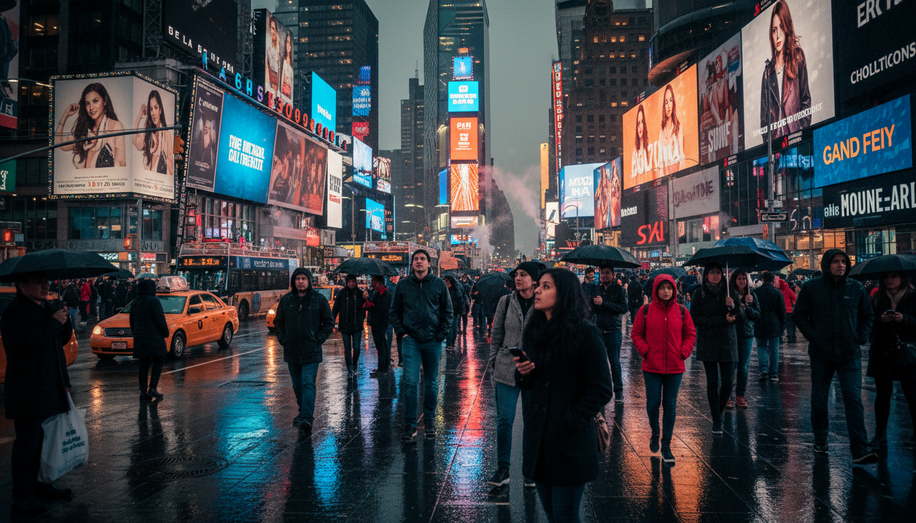

Exploring the Role of Sound in OOH Advertising
Meta description: How audio-enabled OOH and AOOH are reshaping attention, recall and purchase behavior by adding sound to the traditionally silent out-of-home canvas.
Out-of-home has long been defined by what it lacks: sound. For decades, the medium’s power came from bold visuals and clever copy playing silently in the background of daily life. Now, as screens proliferate and attention fragments, that supposed limitation is fast becoming the next frontier. OOH is finding its voice.
Digital out-of-home (DOOH) networks and in-venue audio out-of-home (AOOH) systems are bringing sound into public spaces in increasingly sophisticated ways. From audio-enabled street furniture to retail soundscapes, brands are discovering that adding a carefully calibrated soundtrack can dramatically increase engagement and influence behavior at key decision moments.
Sound matters because the brain treats it differently. Numerous studies have found that audio advertising drives high recall and strong emotional response. Research cited by audio platforms indicates that listeners remember audio and podcast ads more than billboards and even many digital formats. Audio ads have also been shown to build “mental availability” — making a brand easier to recall and consider when a buying situation arises, even if the listener is not currently in-market. In the context of OOH, where exposure is often brief and ambient, that kind of stickiness is a serious advantage.
For DOOH, the addition of sound transforms a passive screen into a more immersive experience. Place-based networks in malls, transit hubs and urban centers are now pairing motion graphics with short, contextual audio to push consumers “over that last mile” to purchase. The American Dairy Association, for example, ran a week-long audio-enabled DOOH holiday campaign across more-than 50 locations in Indiana and saw a 4% year-on-year uplift in milk sales. The creative was not simply louder; it was situational, timely and tightly linked to nearby points of sale.
The impact becomes even clearer in retail environments, where AOOH is redefining what in-store media can do. Technology providers are delivering premium music and programmatic audio ads that feel native to the space while still carrying persuasive messages. Seventy percent of buying decisions are made after a shopper enters the store, and in-store audio messaging has been shown to inspire around 20% of shoppers to change their minds at the point of purchase. That makes AOOH a powerful bottom-of-funnel lever: messages hit when baskets are open and choices are still fluid.
Crucially, this new wave of sound in OOH is not about crude blasting. It is about personalization without invasive data. AOOH systems can tailor playlists and ad messages by location, time of day, store type and local context, without needing individual-level targeting. The music in a suburban supermarket at 9 a.m. can be entirely different from the soundtrack in an urban fashion store at 7 p.m., with corresponding variations in audio creative. This contextual relevance is what helps audio “cut through the noise,” even in busy environments.
Programmatic infrastructure is making audio-enabled OOH more accountable as well. In physical venues, closed-loop attribution models can link exposure to sales outcomes, giving marketers clearer visibility into ROI. For DOOH, audio impressions can be planned and optimized with the same sophistication as online audio, with data on footfall patterns, dayparts and audience segments informing when and where campaigns run. The result is a medium that starts to look and behave more like digital audio — but with the added impact of presence in the real world.
The creative bar, however, is high. Without visuals to lean on, audio must work harder and faster. Best-practice analysis of top-performing audio ads shows that branding early and consistently, using distinctive sonic assets and keeping messaging fluent all improve both short- and long-term effects. Music and sound design are not garnish; they are core brand cues. In OOH contexts, where exposure may be partial or interrupted, familiar audio logos, signature tracks and recognizable voices can act as mental shortcuts to the brand.
Emotion is another critical dimension. Studies and industry tests point to audio’s particular strength in eliciting feelings — from warmth and nostalgia to urgency and excitement. AOOH campaigns that integrate curated playlists aligned to audience tastes and brand positioning can create a halo around in-store messages. One study from MAGNA, referenced by AOOH providers, reports that listeners are 35% more receptive to audio ads than viewers are to visual ads, suggesting that well-crafted soundtracks can make commercial messages feel less like interruptions and more like part of the experience.
As OOH owners add speakers to screens and venues, the industry also has to navigate responsibility. Volume, repetition and contextual fit will define whether audio-enhanced OOH is experienced as service or noise. The most promising deployments so far use sound sparingly and intelligently: subtle directional speakers at street level; short, clear calls-to-action in-store; localized creative that reflects the environment rather than fighting it.
For advertisers, the opportunity is to think of OOH not as a silent canvas but as a multisensory platform. Visuals capture attention; sound deepens memory, shifts mood and nudges action. In a media ecosystem where consumers can skip, block and scroll past most messages, audio OOH’s unskippable, ambient presence — combined with data-driven planning and rigorous measurement — may prove to be one of the most potent new tools in the channel mix.
OOH has always been about meeting people where they are. As the medium learns to speak and sing, the question is no longer whether sound belongs in public spaces, but how thoughtfully the industry can orchestrate it.