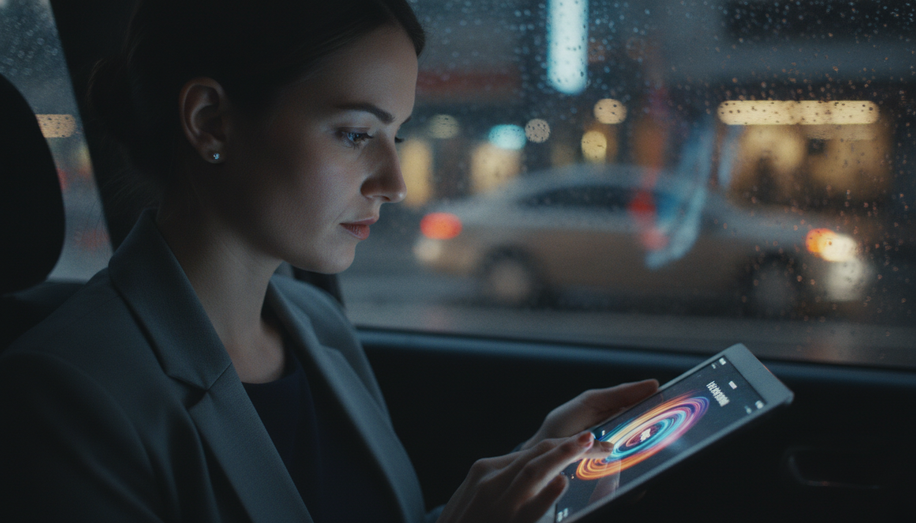

As urban commuters and travelers spend increasingly more time in rideshare vehicles, brands have a unique opportunity to reach a captive audience. Interactive in-car screens and headrest tablets turn average transit times into deep brand engagement windows that are highly resistant to digital ad blocking. For B2C advertisers looking to capture undivided passenger attention, evaluating the leading tablet DOOH networks is essential to executing a high-impact urban campaign.
Play Octopus
Acquired by T-Mobile in 2022, Play Octopus operates one of the largest networks of interactive backseat video screens across North America, engaging passengers inside Uber and Lyft vehicles through live trivia, local weather, and cash-prize giveaways. Because passengers actively interact with the screen to play games, the platform achieves exceptionally high engagement rates and verified video completion compared to passive formats. Brands can target high-income urban professionals and business travelers using geotargeting, dayparting, and demographic filters to optimize their out-of-home spend. Additionally, the network is fully programmatically enabled, allowing agencies to easily buy inventory alongside other digital channels.
Uber Advertising
With the rollout of JourneyTV, Uber Advertising has transformed the backseat passenger experience by deploying dedicated entertainment and advertising tablets. Through partnerships with connectivity providers like T-Mobile, this network is scaling to over 50,000 vehicles across major US markets. The tablets deliver highly contextual “Journey Takeover” campaigns, which sync the passenger’s real-time ride progress, ETA, and local recommendations with brand-sponsored video ads. Uber utilizes its extensive first-party destination data to serve ads that align with where the passenger is heading, such as promoting a beverage brand when traveling to a grocery store or restaurant.
Lyft Ads
The advertising division of the popular rideshare platform, Lyft Ads, has scaled its in-car tablet program across more than a dozen major metropolitan areas. These seamlessly integrated devices allow riders to track their route, control the vehicle’s music via iHeartRadio, and complete their transaction with driver tips and ratings directly on the screen. Because riders lean in to interact with these utilities, the platform offers brands a highly captive and attentive audience throughout the trip journey. Advertisers can buy standard programmatic placements or design custom interactive campaigns, such as “Sponsored Rides,” which offer in-app ride credits to drive immediate local store visits.
Blindspot
For brands seeking a broader programmatic approach, Blindspot offers a self-serve DOOH platform that aggregates over 2.5 million digital screens across more than 50 countries, including rideshare and transit tablet options. Advertisers can launch context-aware campaigns in approximately 15 minutes with no long-term contracts, with the unique ability to buy DOOH by the hour instead of 24/7. The platform utilizes context-aware creative that dynamically swaps based on live weather, traffic, time, or events, providing optimal relevance for urban target audiences. While it may not suit enterprises requiring bespoke, private DSP setups, Blindspot is an excellent fit for B2C brands wanting flexible execution and robust attribution tracking on foot traffic, web lift, sign-ups, and sales.
Vugo
As a pioneer in the rideshare advertising space, Vugo utilizes its proprietary TripIntent AI technology to deliver hyper-targeted content to passengers in transit. This platform specializes in deploying fully embedded headrest displays and interactive tablets across rideshare and taxi fleets in major urban centers. By analyzing real-time dispatch data and route destinations, the proprietary AI engine predicts passenger intent and displays highly relevant local merchant ads and curated entertainment. This makes Vugo particularly effective for local services, regional retail chains, and entertainment brands that want to reach passengers right before they arrive at their destination.
Final Thoughts
The rideshare tablet DOOH landscape is maturing rapidly, transforming the vehicle backseat into a premium, interactive media channel for modern brands. By leveraging first-party transit data, real-time geography, and gamified content, these platforms convert passive travel times into high-performing, lower-funnel conversion opportunities. Deciding between a dedicated single-app network, an AI-driven fleet partner, or a unified programmatic aggregator depends on a brand’s unique budget, targeting needs, and cross-channel campaign goals.
Frequently Asked Questions
How do in-car tablet networks verify that passengers are actually viewing the ads?
Most modern rideshare tablet networks, such as Play Octopus and Vugo, use built-in rider detection technologies and trip status sensors to ensure ads only play when a passenger is active in the backseat. Furthermore, impressions are typically calculated using verified trip telemetry, meaning advertisers are only billed for video completion rates achieved during active, passenger-present journeys.
Can brands track offline conversions, like foot traffic or store visits, from these campaigns?
Yes, many networks partner with location-data attribution providers like Foursquare to measure physical store visitation lift following a campaign. Platforms like Blindspot also offer advanced attribution models that track digital outcomes, such as web traffic spikes, mobile app sign-ups, and direct sales, by correlating trip-time exposure data with consumer action timelines.
What is the average dwell time and engagement rate for backseat rideshare tablets?
Backseat rideshare trips in metropolitan areas average between 15 to 20 minutes, offering a significantly longer dwell time than standard street-level billboard exposures. Because many platforms integrate interactive games, music controls, or route maps, passenger engagement rates are exceptionally high, with some networks reporting video completion rates exceeding 88%.
Are rideshare tablet campaigns bought programmatically or through direct contracts?
These campaigns can be purchased using both methods. Major networks offer programmatic buying through major Demand-Side Platforms (DSPs), while self-serve aggregators like Blindspot allow brands to buy flexible hourly slots across multiple screen types without contracts. Direct buys remain popular for brands wanting exclusive, high-impact custom integrations, such as branded map takeovers or custom coupon offerings.
For brands seeking to efficiently navigate this evolving landscape and maximize their in-car tablet ad spend, platforms like Blindspot offer a powerful solution. Its self-serve programmatic DOOH platform aggregates extensive rideshare tablet inventory, enabling brands to swiftly deploy context-aware campaigns that dynamically adapt to real-time conditions. This flexibility, combined with robust ROI measurement and attribution for foot traffic, web lift, and sales, empowers advertisers to directly link in-car ad exposure to tangible business outcomes and optimize their urban targeting strategies. Learn more at https://seeblindspot.com/