
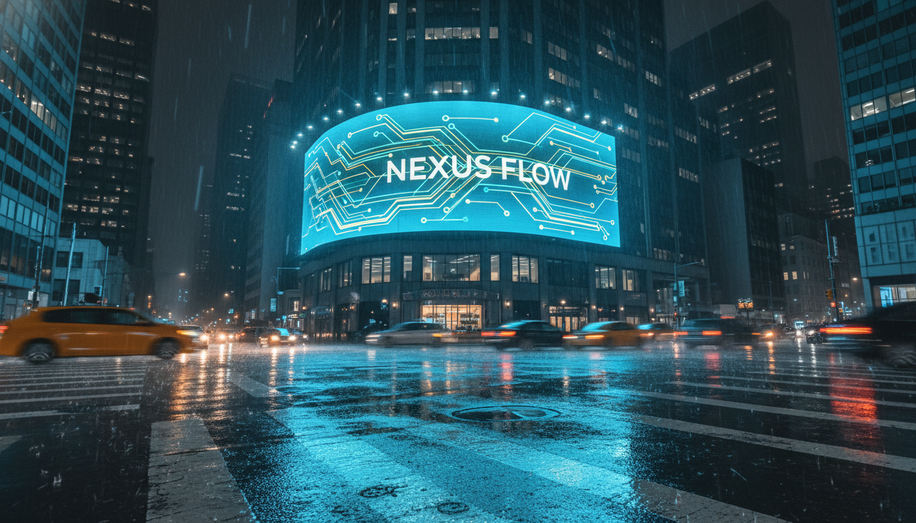

For years, out-of-home advertising was dominated by big consumer brands selling soda, sneakers, and streaming services. But as digital tools have transformed media planning and measurement, a new wave of non-traditional advertisers is moving outdoors. B2B firms, healthcare providers, and educational institutions—sectors once considered too niche or “unsexy” for billboards—are quietly proving that the right OOH strategy can reach highly specific audiences with surprising efficiency.
The shift is partly driven by data. Marketers in niche industries are under pressure to show measurable ROI, and modern OOH has evolved well beyond static highway boards. Location intelligence, mobile retargeting, and digital out-of-home (DOOH) networks now allow advertisers to pinpoint audiences based on behavior, context, and proximity—then track what happens next. For B2B, healthcare, and education, that means OOH can finally be planned with the same precision they expect from digital channels.
B2B marketers are perhaps the most unlikely converts. Historically, their budgets flowed to trade shows, industry publications, and highly targeted digital campaigns. Yet as travel budgets shrink and decision-makers spend less time at conferences, many B2B brands are rethinking how to generate awareness with the right buyers earlier in the funnel. Strategic OOH placements near industrial parks, logistics hubs, business districts, and corporate campuses can quietly saturate the daily environment of engineers, procurement managers, and executives. An IT security firm, for example, can concentrate DOOH screens in airport business lounges, downtown commuter hubs, and tech corridors, pairing them with mobile retargeting to continue the conversation on LinkedIn and programmatic display. The message isn’t mass-market; it’s focused on pain points that matter to a narrow set of professionals—compliance headaches, uptime, operational efficiency—delivered in the places they move through every day.
Branding is key in this context. B2B sales cycles are long, complex, and committee-driven. Research shows that consistently showing up as a trusted expert can make the difference when a buying cycle finally kicks off. OOH supports that brand-building role by reinforcing credibility in the real world: a cloud company that appears on airport jet bridges and conference center screens signals scale and stability; a manufacturing supplier that dominates boards along freight corridors looks like an industry standard, not an upstart. The most effective campaigns avoid generic slogans and instead focus on how they make their audience’s job easier, turning a billboard into an extension of a thought leadership strategy.
Healthcare advertisers bring a different set of demands—and constraints—to OOH. Regulations and privacy concerns rule out hyper-personal targeting, yet healthcare brands still need to connect with highly specific audiences. Modern OOH offers a way through. Providers can use demographic and behavioral data to map neighborhoods with high concentrations of likely patients for particular specialties, then deploy messages tailored to those needs. A health system promoting oncology services can cluster boards along commuter routes serving at-risk populations, while a pediatric practice emphasizes convenience and trust in areas with young families.
Digital out-of-home is especially well suited to healthcare’s context-heavy messages. Screens in medical office buildings, pharmacies, and near hospitals can deliver timely content tied to preventive care campaigns, seasonal health concerns, or new clinic openings. Studies have shown that pairing OOH with mobile retargeting can significantly lift specialist visits and prescription fills by nudging patients from awareness to action. Meanwhile, content strategy increasingly mirrors niche medical marketing: rather than generic “we care” messaging, the most effective campaigns highlight specific service lines—cardiology, orthopedics, mental health—and direct audiences to clear next steps, whether that’s scheduling a screening or attending a community health event.
The education sector is navigating its own transformation, and OOH has become a tool for standing out in a crowded market. Universities, community colleges, online programs, and vocational schools are all chasing overlapping pools of students and adult learners. With budgets tight and digital channels increasingly noisy, OOH provides a way to anchor a brand in the physical communities it serves. A university targeting first-generation college students might focus near high schools, transit routes used by teens, and youth sports facilities. A nursing program or technical college, by contrast, can position creative near hospitals, distribution centers, or manufacturing plants to reach working adults considering a career change.
For educational institutions, the opportunity lies in aligning placements with life moments. Transit shelters near urban job centers can speak to the commuter weighing whether to go back to school; DOOH screens on campus-adjacent streets can reinforce open house dates and application deadlines; boards near military bases can spotlight programs tailored to veterans. The message is less about prestige and more about pathways—flexible programs, financial aid, career outcomes—reinforced repeatedly in the spaces where decisions about the future are quietly made.
Across all these niche industries, the real innovation isn’t just placement; it’s integration. The most successful campaigns treat OOH as the high-impact, top-of-funnel touch that primes an audience for deeper engagement in digital channels. A B2B advertiser drives prospects from a concise outdoor message to a specialized landing page with case studies and webinars. A healthcare provider links boards and DOOH to online symptom checkers, appointment portals, or telehealth platforms. An educational institution uses geofenced OOH to build retargeting pools for personalized email and social campaigns.
Measurement closes the loop. Footfall analytics, call tracking, QR codes, web lift studies, and matched market tests are now common tools in OOH planning. Niche advertisers can correlate exposure with increases in clinic visits, campus tours, demo requests, or form fills, then refine creative and placements based on what actually moves their specific audience. That data-driven feedback is eroding old assumptions that OOH is “just for awareness” and “only for big consumer brands.”
As the lines blur between physical and digital media, OOH is becoming a surprisingly natural fit for sectors defined by specialization rather than scale. B2B companies, healthcare providers, and educational institutions may never dominate the skyline like global consumer brands, but they don’t need to. With sharper targeting, smarter creative, and tighter integration into omnichannel plans, niche advertisers are discovering that sometimes the most effective way to reach a specific audience is to step outside.