
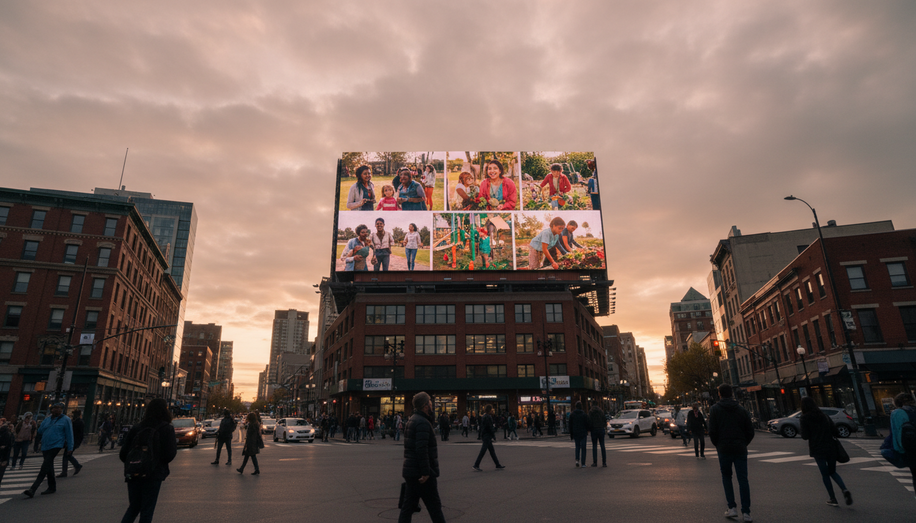

In an era saturated with screens, the billboard remains one of advertising’s most visible—and unavoidable—mediums. Out-of-home (OOH) and its digital counterpart, DOOH, occupy shared public spaces that people cannot simply scroll past or mute. That power comes with a responsibility that the industry is only beginning to fully confront: how to use public space, personal data, and persuasive messaging in ways that respect citizens as much as they serve brands.
The most urgent frontier is privacy. Digital OOH networks increasingly rely on data to refine targeting—using location information, traffic patterns, and sometimes anonymized device IDs or camera-based analytics to infer demographics. The promise is efficiency and relevance; the risk is a creeping sense of surveillance in spaces people once assumed were free from tracking. Research and industry commentary underscore a simple truth: users expect transparency and respect for their privacy rights, especially in public spaces like streets, transit hubs, and parking garages.
That expectation is both legal and ethical. Regulations such as the GDPR in Europe and CCPA in California set hard lines on data collection and usage, but compliance is only a baseline. Ethical practice means going further: minimizing data collection, avoiding sensitive inferences, and ensuring that any data used for DOOH targeting is aggregated, anonymized, and impossible to trace back to individuals. Companies like A Lot Media publicly emphasize robust data protection and transparent practices in their DOOH initiatives, reflecting a broader move toward privacy-by-design in the sector. If people feel watched rather than served, the medium’s long-term legitimacy is at risk.
Ethics in OOH extend beyond data to the very nature of public space. Critics argue that billboards make advertising “omnipresent,” crowding out citizens’ ability to engage with their environment and turning streets into continuous sales pitches. Scenic and civic advocacy groups point to the visual clutter, the degradation of landscapes, and the potential devaluation of nearby properties. Digital billboards raise additional concerns: studies have linked them to higher crash rates compared with control sites, fueling debates over safety and distraction.
The industry’s own codes acknowledge that some limits are necessary. The Outdoor Advertising Association of America’s Code of Industry Principles, for example, addresses proximity to schools for age-restricted products, the importance of reasonable display density, and a commitment to pro bono public service messaging. These guidelines are a start, but they also highlight a key tension: billboards are both commercial instruments and elements of the civic environment. Every placement decision influences not only campaign performance but also how a neighborhood looks, feels, and functions.
Responsible messaging sits at the heart of this conversation. The ethics of OOH creative are not fundamentally different from those of other media, but the stakes are higher because exposure is involuntary and broad. Content that is misleading, inflammatory, or exploitative cannot be “opted out” of by those who encounter it. Maximum Media, among others, has emphasized authenticity, truthfulness, and diversity in billboard content as core ethical obligations. In practice, that means campaigns should avoid exaggeration, disclose material information (such as health risks or the use of CGI that dramatically alters reality), and commit to accurate depictions of products and outcomes.
Representation matters as well. Billboards help define who is visible in public life. When OOH ignores certain communities or leans on stereotypes, it reinforces social exclusion in a highly public way. Conversely, creative that reflects a range of ages, races, genders, abilities, and lifestyles does more than check a box; it signals that the public sphere belongs to everyone. Ethically minded operators increasingly scrutinize boards for inclusivity and for potential harm, rejecting work that might demean, stigmatize, or incite.
Environmental considerations are another ethical dimension often overlooked in campaign planning. Traditional vinyl, the energy required to light and power digital boards, and the lifecycle of structures all contribute to the medium’s footprint. Advocacy organizations highlight that the true costs of billboard proliferation include not just visual pollution, but also resource use and carbon emissions. Some operators are responding with recyclable materials, lower-energy displays, and stricter policies on where and how many sites they deploy. For brands that speak loudly about sustainability, choosing partners and formats aligned with those values is becoming part of reputational risk management.
So what does an “ethical billboard” look like in practice? It begins with a mindset: treating viewers as citizens first and consumers second. That translates into several concrete behaviors. On the privacy side, campaigns should favor contextual over hyper-personalized targeting, collect only the minimum data needed, and communicate clearly—on websites, in policies, and, where feasible, on the street—about how DOOH data is handled. On the spatial front, planners and media owners should collaborate with local authorities, urban designers, and community groups to reduce clutter, avoid sensitive areas, and consider sightlines, safety, and neighborhood character as seriously as impressions and CPMs.
In creative development, teams should adopt standards that go beyond legal copy review, incorporating ethical checklists that flag potential misinformation, emotional manipulation, or harm to vulnerable groups. The bar for health, finance, and political messaging should be especially high. Commitments to diversity and inclusion should be reflected in casting, narratives, language, and production teams. When mistakes occur—and they will—swift removal of problematic creative and transparent communication about how it slipped through are key to rebuilding trust.
Finally, ethical OOH looks for ways to give back to the public sphere it occupies. Pro bono public service campaigns, timely safety alerts, and community-focused messaging can all help balance the ledger, provided they are more than token gestures filling unsold inventory. The most credible efforts integrate civic value into long-term strategy, not just as a PR line.
OOH and DOOH will remain powerful tools precisely because they are inescapable. The question for the industry is whether that power will be perceived as intrusive or beneficial. By foregrounding privacy, respecting public space, and committing to truthful, inclusive messaging, advertisers and media owners can ensure that the billboards shaping our cities and daily journeys do more than sell—they contribute meaningfully to the public life they inhabit.
Navigating these ethical complexities requires sophisticated tools that balance commercial effectiveness with civic responsibility. Blindspot’s location intelligence and audience measurement capabilities empower advertisers to make informed, ethical decisions about site selection—reducing clutter, enhancing safety, and respecting neighborhood character—while also enabling contextual targeting with aggregated, anonymized data that prioritizes privacy. This commitment helps ensure that OOH contributes meaningfully to the public life it inhabits, rather than merely selling. Learn more at https://seeblindspot.com/