
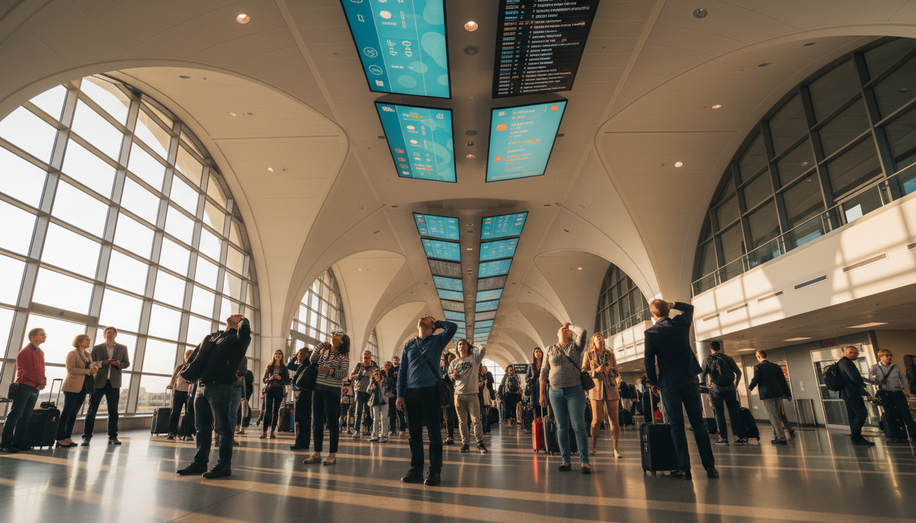

Programmatic digital out-of-home, or programmatic DOOH, is reshaping how brands plan, buy, and optimize outdoor media. For years, out-of-home advertising was defined by long lead times, fixed placements, and a largely static relationship between advertiser and audience. Today, automation is turning those limitations into strengths, giving marketers the ability to activate campaigns with far greater speed, precision, and flexibility than traditional buying methods allow.
At its core, programmatic DOOH applies the logic of digital advertising to physical screens in public spaces. Instead of negotiating each placement manually, advertisers can use software platforms to access inventory across billboards, transit hubs, malls, airports, gyms, and retail environments. Many of these buys are executed in real time, with decisions informed by audience data, environmental signals, and campaign goals. That shift has made DOOH feel less like a fixed media category and more like a responsive channel that can adapt as conditions change.
The biggest appeal for brands is efficiency. Traditional outdoor campaigns often require lengthy planning cycles, complex coordination with media owners, and limited room for mid-campaign adjustments. Programmatic buying compresses that process dramatically. Campaigns can be launched quickly, budgets can be shifted toward stronger-performing screens, and creative can be updated without the delays associated with static production. For advertisers accustomed to the agility of online media, that speed is a significant advantage.
Precision targeting is another reason programmatic DOOH is gaining momentum. Rather than buying broad reach alone, marketers can align screen selection with audience characteristics and real-world behavior. That might mean targeting commuters during the morning rush, shoppers near a retail district, or travelers in an airport terminal. In some cases, campaigns can be informed by aggregated data signals such as mobility patterns, time of day, weather, local events, or sports schedules. The result is messaging that feels more relevant to the moment, increasing the likelihood that it resonates.
This contextual flexibility is especially valuable for brands that want outdoor advertising to work harder than simple awareness. A coffee chain can promote iced drinks on hot afternoons and switch to hot beverages when temperatures drop. A sportswear brand can connect creative to marathon day, while a restaurant can highlight dinner offers as evening traffic builds. Because digital screens can change instantly, DOOH becomes a living medium rather than a fixed impression. That responsiveness gives brands a way to stay timely in an environment where relevance often determines effectiveness.
Programmatic DOOH also improves campaign management in ways that matter to marketers and media teams. Because the buy is automated, advertisers can monitor delivery and optimize performance while a campaign is running. If one region is outperforming another, spend can be redirected. If a creative variant is resonating better in one context, it can be scaled more broadly. This near real-time control is one of the clearest departures from conventional outdoor advertising, where optimization typically happens after the campaign has ended rather than during it.
The growth of programmatic buying is also helping out-of-home advertising fit more naturally into omnichannel planning. Brands increasingly want consistency across connected TV, social, display, audio, and outdoor, and programmatic DOOH offers a bridge between the physical and digital worlds. It can be coordinated with broader audience strategies, retargeting efforts, and location-based measurement approaches, making outdoor media easier to integrate into full-funnel campaigns. For marketers who once viewed OOH as a standalone awareness play, that integration is changing expectations.
Measurement remains a central part of the conversation. While out-of-home has always been effective at scale, proving its contribution has historically been a challenge. Programmatic infrastructure is helping close that gap by making campaign delivery and exposure more transparent. Depending on the platform and data partners involved, brands can evaluate foot traffic lift, store visitation, brand outcomes, or other proxies for performance. That does not make DOOH as instantly measurable as a click-based channel, but it does bring the medium closer to the accountability marketers now expect.
For brands considering the shift, the message is straightforward: programmatic DOOH is not merely a faster way to buy billboards. It is a new operating model for outdoor advertising, one that blends the impact of large-format media with the responsiveness of digital technology. As more inventory becomes addressable and more tools support data-driven decision-making, automated outdoor buying is moving from innovation to standard practice. In a fragmented media environment, that combination of scale, precision, and adaptability is becoming difficult for brands to ignore.
For brands navigating this evolving landscape, platforms like Blindspot offer comprehensive solutions to fully leverage programmatic DOOH. Through real-time campaign performance tracking, advanced audience measurement and analytics, and granular ROI measurement and attribution, Blindspot empowers marketers to execute precise, adaptive, and highly accountable outdoor campaigns, transforming potential into measurable impact. Discover more at https://seeblindspot.com/