
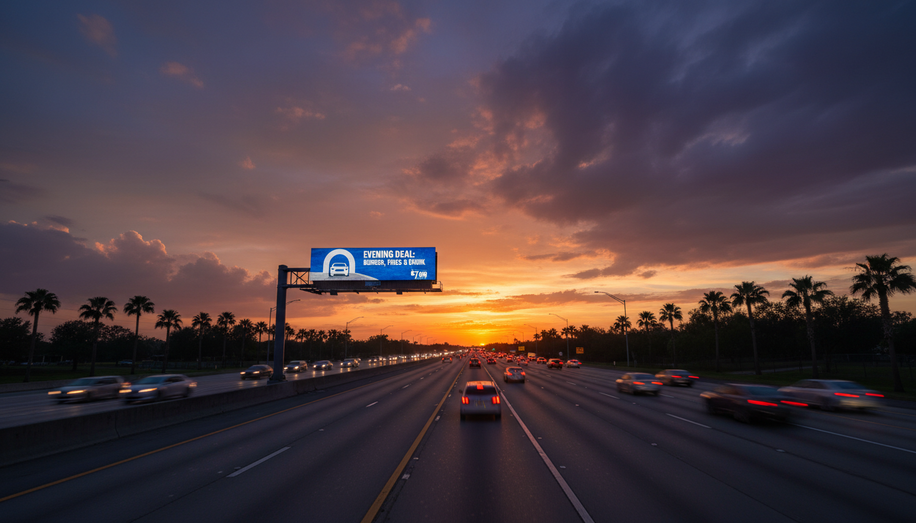

In the fast-paced world of drive-through commerce, where quick-serve restaurants, pharmacies, and coffee chains thrive on impulse decisions made behind the wheel, out-of-home (OOH) advertising has emerged as a precision instrument for capturing on-the-go audiences. No longer just a billboard shouting into the void, OOH now leverages location intelligence, dynamic digital displays, and hyper-local messaging to funnel drivers straight from highway sightlines to service windows, turning fleeting glances into measurable foot—or rather, wheel—traffic.
Consider the quick-serve restaurant (QSR) sector, where brands like those dominating urban interchanges have long recognized OOH’s power to ignite immediate action. Research from Billups highlights how price promotions resonate most powerfully, swaying 42 percent of audiences overall and climbing to 51 percent in rural markets. A digital billboard flashing “2 for $5” near a bustling exit ramp doesn’t just inform; it exploits the split-second hunger pang, prompting drivers to signal and merge into the drive-through queue. This urgency is amplified by limited-time offerings, which hook 31 percent of viewers by invoking scarcity—think a neon glow announcing a seasonal burger drop-off before it’s gone. For pharmacies, the playbook shifts slightly: directional cues become king, with 29 percent of responses tied to “Next Exit” signage that guides weary commuters to flu shots or prescription pickups amid rush-hour chaos.
Strategic placement is the linchpin of this drive-through dominance. Billboards tower over high-traffic corridors, their massive visuals of steaming fries or glowing wellness aisles piercing the monotony of commutes. Yet, the real evolution lies in digital signage, where LED arrays pulse with real-time updates—adapting promotions based on time of day or weather, like a coffee chain teasing iced lattes during a heatwave. Street furniture, from bus shelter wraps to pedestrian benches near strip malls, snares urban drivers idling at lights, while vehicle wraps on delivery fleets extend the reach, transforming every pizza run into a rolling endorsement. Transit ads on buses shadowing drive-through clusters further layer exposure, ensuring the message sticks even as audiences weave through traffic.
Pharmacies, battling e-commerce encroachment, have found OOH invaluable for last-minute needs. A study by Nielsen underscores OOH’s supremacy in sparking online activity—indexing four times above norms per ad dollar—often bridging physical impulse to app-based refills. Imagine geofenced digital kiosks near highway pharmacies beaming personalized alerts: “Drive-Thru Open: 24-Hr Allergy Relief, 20% Off.” This location-based precision, powered by beacons and mobile integration, measures uplift with surgical accuracy, as JCDecaux campaigns demonstrate through footfall attribution tech tracking visits within campaign radii.
Best practices demand mouthwatering—or in pharmacy terms, reassuring—creative execution. QSRs swear by high-definition food porn: glistening burgers stacked impossibly high, steam rising in slow-motion allure to trigger salivary response. Younger demographics, per Billups data, prioritize food quality (42 percent for Gen Z), so messaging evolves to spotlight farm-fresh sourcing or nutrition stats, rendered in vibrant animations on interactive touchscreens. These engage passersby with menu customizers or digital coupons, gamifying the pit stop. For drive-through banks or dry cleaners, the emphasis flips to convenience: “5-Minute Oil Change Ahead” or “ATM Cash, No Lines,” paired with clear icons and QR codes for seamless digital handoffs.
Measurement has demystified OOH’s ROI, elevating it from awareness play to performance driver. Clear Channel Outdoor reports dealerships—analogous to drive-throughs in their service-lane model—saw 83 percent visit spikes from OOH blasts, a blueprint for QSRs and pharmacies. Tools like geofencing pair OOH exposures with mobile ad verification, quantifying how a highway hoarding translates to 15 percent drive-through uplift. Multi-format mixes amplify this: pair a static billboard with nearby digital rotations and sponsored event wraps, creating a surround-sound assault on senses.
Challenges persist—regulatory hurdles on highways, ad fatigue in oversaturated zones—but savvy operators counter with data-driven rotations and A/B creative tests. Wilkins Media notes OOH’s role in multi-channel synergy, where a drive-through prompt sparks web traffic for loyalty sign-ups, sustaining the sales loop. For on-the-go businesses, OOH isn’t optional; it’s the gravitational pull steering transient consumers into revenue streams.
As 2026 unfolds, with autonomous vehicles and AR overlays on the horizon, OOH’s adaptability ensures it remains the ultimate transit whisperer. Drive-through empires that master its precision—blending bold visuals, urgent calls-to-action, and tech-fueled targeting—won’t just capture audiences; they’ll own the road.