
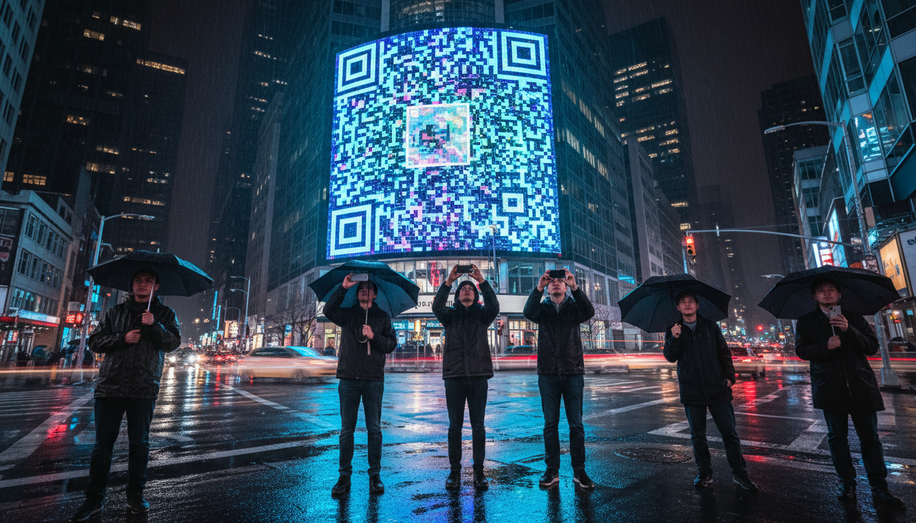

In the fast-evolving world of out-of-home (OOH) advertising, the static billboard is giving way to a dynamic powerhouse capable of sparking immediate consumer action. Once relegated to mere brand awareness, OOH campaigns are now leveraging QR codes, NFC tags, and other interactive technologies to transform fleeting impressions into measurable direct responses. This shift bridges the physical-digital divide, turning passive passersby into engaged participants who scan, tap, and convert on the spot.
QR codes have emerged as the linchpin in this revolution, particularly in digital out-of-home (DOOH) environments. Towering billboards and transit screens once struggled to drive traffic beyond recall; today, a simple scan unlocks personalized promotions, app downloads, or exclusive content. Consider Coca-Cola’s 2023 summer campaign in Mexico, where QR codes on DOOH screens in Guadalajara and Monterrey shopping malls directed users to Spotify playlists and Instagram filters. The result? A seamless fusion of visibility and virality, with users sharing their experiences and amplifying reach organically. Industry data underscores the impact: combining OOH with QR codes can boost ad awareness by up to 200 percent, while scan rates have surged over 26 percent since 2020 as smartphones became ubiquitous scanning tools.
Strategic placement is key to unlocking this potential. Experts emphasize the “10:1 scanning ratio,” where the QR code’s size is one-tenth the viewer’s distance, positioned at eye level with a compelling call-to-action like “Scan for Your Deal.” High-dwell areas such as bus shelters, malls, and urban street furniture thrive here, avoiding risky highway billboards where safety trumps interactivity. Brands like Pernod Ricard’s Malfy Gin took this further, embedding QR codes on packaging that transported scanners to virtual Italian landscapes, encouraging social shares and deepening product affinity. In parks and zoos, codes at exhibits link to animal facts or event schedules, turning exploration into effortless engagement.
Beyond QR codes, NFC tags offer a tap-and-go evolution, ideal for close-range interactions. These near-field communication chips, embedded in posters or benches, allow instant access without precise aiming—perfect for on-the-move urbanites. A restaurant ad at a bus stop might feature an NFC tag granting directions or a digital menu, while a retail bench promotes coupons or bookings. This contactless convenience, popularized during the COVID-19 era, has made OOH actionable in ways print media never could.
Augmented reality (AR) and gamification elevate these tools into immersive experiences. Scanning a QR on a billboard might overlay a 3D product model or animated character narrating the brand story, as seen in recent AR-integrated campaigns. Gamified hunts, where multiple OOH scans unlock prizes or loyalty rewards, foster community and repeat visits. Darabase’s AR 101 highlights how such tactics drive real-time conversions, with global fan collaborations solving puzzles for exclusive access. Dynamic QR solutions in DOOH take it further, enabling real-time content updates—swap promotions mid-campaign without reprinting—while tracking scans for precise ROI measurement.
The data speaks volumes. QR-enabled OOH not only captivates but converts: Vistar Media reports campaigns triggering app installs and retail navigation, with dwell-time analytics proving lower-funnel efficacy. Brands like those using Scanova’s tools report sustained control over live campaigns, adapting to audience feedback instantly. Yet success demands creativity—think visual brand codes from Snapchat or TikTok, scanned for AR filters, or AppClips for contextual app discovery without downloads.
Critics once dismissed interactive OOH as gimmicky, but 2026 metrics tell a different story. With consumers checking phones nearly 100 times daily, these gateways—QR, NFC, AR—make advertising unskippable and trackable. The bridge from awareness to action is sturdier than ever, proving OOH’s renaissance as a direct-response engine. For advertisers, the message is clear: in a world demanding immediacy, the smartest campaigns don’t just shout; they invite the scan.
Blindspot directly supports this evolution by offering real-time campaign performance tracking and programmatic DOOH campaign management, allowing advertisers to dynamically update interactive content and monitor scan rates for immediate optimization. Furthermore, its advanced location intelligence and robust ROI measurement and attribution capabilities ensure that interactive OOH placements are strategically selected for maximum engagement and that the direct impact of every scan and tap is clearly understood, solidifying OOH’s role as a powerful conversion engine. For advertisers seeking to harness this actionable future, Blindspot’s platform provides the precision needed to master direct-response OOH, discover more at https://seeblindspot.com/