
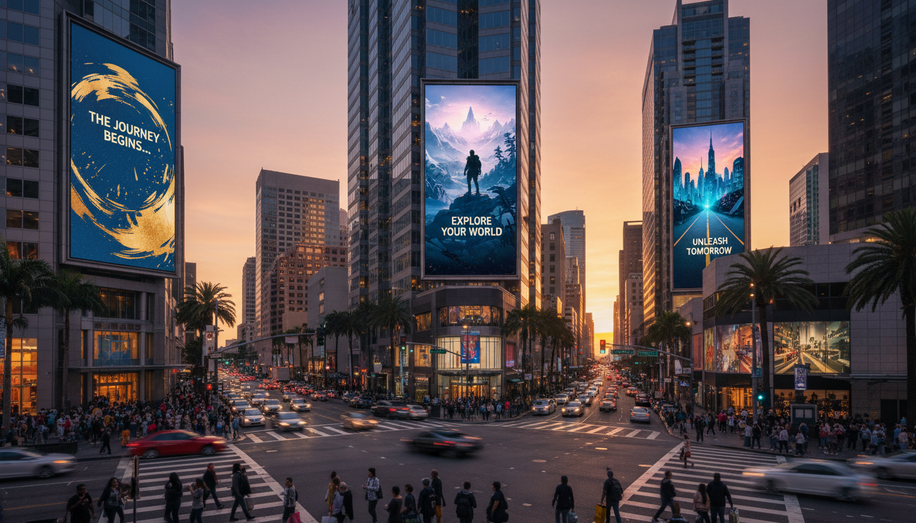

In the bustling corridors of urban life, where commuters rush past towering billboards and shoppers glance up at digital screens, out-of-home (OOH) advertising has evolved from isolated visuals into a sophisticated medium for serialized storytelling. Brands are increasingly harnessing sequences of static or digital OOH assets—strategically placed along daily routes or timed for progressive reveals—to craft narrative arcs that unfold like chapters in a novel, building anticipation and forging emotional connections with audiences.
This multi-panel approach leverages OOH’s inherent strength: its unmissable presence in the real world. Unlike digital ads that compete for fleeting scrolls, OOH embeds stories into the physical journey, turning routine commutes into immersive experiences. Picture a campaign where a billboard on a highway introduces a mysterious character—a weary traveler eyeing a distant horizon—followed days later by transit ads revealing their first obstacle, a raging storm, and culminating in a spectacular digital reveal at a city square where the hero triumphs. Such sequencing exploits the “peak-end” rule, as psychologist Daniel Kahneman described, where the final impression dominates memory, ensuring the brand lingers long after the last panel.
The key lies in deliberate placement and timing. Data-driven insights now allow advertisers to map consumer paths with precision, positioning panels along high-frequency routes like subway lines or arterial roads. Frequency amplifies this: repeated exposures—up to dozens daily in dense urban areas—heighten familiarity and response rates, transforming passive viewers into active participants. For instance, a brand might deploy static billboards for the setup, digital out-of-home (DOOH) screens for dynamic twists via animation or AR elements, and transit wraps for the climax, each layer distilling just enough plot to provoke curiosity without spoiling the resolution.
JCDecaux, a global OOH leader, champions this tactic in its urban storytelling playbook, emphasizing reveals that build emotion. “The best stories are multi-dimensional with some twists,” their experts note, advising brands to balance revelation—too little starves richness, too much kills suspense. This mirrors cinematic techniques, where OOH becomes the wide shot in a multi-channel epic. Complementing TV spots with roadside extensions, as Bauer Media Outdoor suggests, fleshes out campaign worlds, repeating slogans or characters to embed them in the psyche. Cross-channel harmony extends the arc: a subway ad teases a puzzle, leading to mobile alerts or online banners that resolve it, maximizing touchpoints.
Digital advancements supercharge these narratives. DOOH’s 34% growth in recent years has introduced programmatic buying, enabling real-time adaptations—like weather-triggered panels that advance the plot dynamically. Interactive displays invite engagement; passersby scan QR codes to vote on story outcomes, fostering virality as social shares amplify the tale beyond its physical bounds. In high-traffic zones, this creates shared experiences, bridging audiences and brands through collective discovery.
Yet success demands authenticity. Branded stories must earn empathy, positioning the brand as hero or guide without overt selling. Know your audience’s intent, distill the plot to its essence, and deliver satisfaction—principles that ensure the narrative resonates. Geographic segmentation sharpens targeting: local businesses sequence panels in neighborhoods, while national campaigns span cities, aligning with demographic flows.
Real-world examples illuminate the potential. Consider campaigns where billboards evolve weekly, much like Broadsign’s highlighted 2025 favorites, using 3D installations for plot pivots that halt traffic—literally and figuratively. Salesloft’s DOOH efforts with Superside turned static formats into interactive sagas, sparking buzz in urban hubs. At Cannes Lions, OOH’s renaissance was celebrated for location-based creativity, delivering tailored stories along customer journeys at scale.
Challenges persist: overexposure risks predictability, and poor sequencing dilutes impact. Marketers must audit routes for optimal flow, test reveals for emotional peaks, and measure via mobile attribution—tracking lifts in brand recall or foot traffic. Still, the rewards are profound. Multi-panel OOH doesn’t just advertise; it serializes brand lore, turning ephemeral glances into enduring bonds.
As cities pulse with programmatic screens and data-fueled placements, this art form promises to redefine engagement. Brands that master narrative arcs across OOH panels will not only capture attention but cultivate loyalty, proving that in the urban narrative, the best stories are those lived one panel at a time. To truly master these intricate OOH narratives and cultivate enduring loyalty, brands require precision tools for strategic orchestration and measurable impact. Blindspot offers the advanced location intelligence and audience analytics necessary for optimal panel placement and dynamic storytelling, alongside programmatic DOOH management for real-time plot adjustments. This comprehensive platform allows marketers to track performance, measure ROI, and ensure each serialized narrative not only captures attention but deeply resonates, transforming ephemeral glances into lasting brand connections. Learn more at https://seeblindspot.com/