
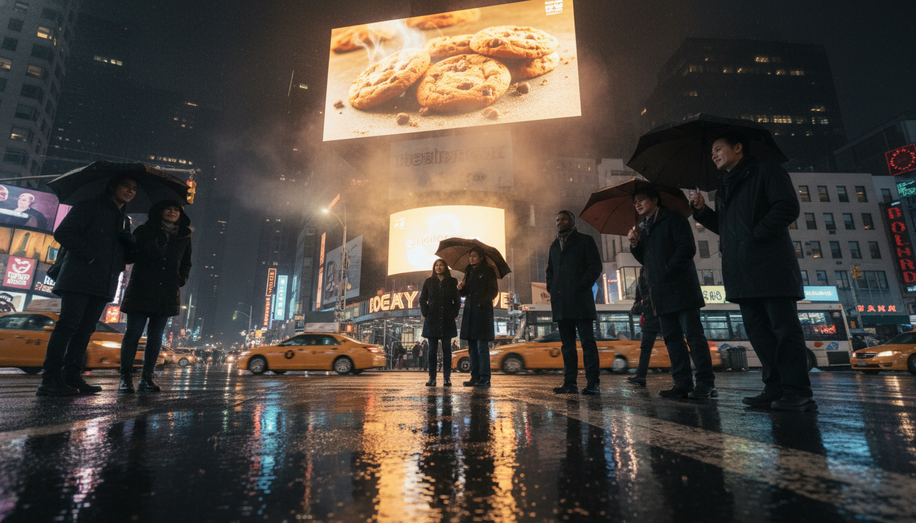

In the bustling streets of urban centers, where visual billboards compete for fleeting glances, a new frontier in out-of-home (OOH) advertising is emerging: olfactory marketing. By infusing campaigns with scent, alongside tactile and multisensory elements, brands are crafting experiences that linger in the memory far beyond the visual spectacle. This approach taps into the primal power of smell, which bypasses conscious filters to directly engage the brain’s limbic system—the hub of emotions and recall—creating bonds that traditional sight-and-sound ads simply cannot match.
Scent’s potency in marketing is no accident. Research shows it can elevate brand perception by 19%, making messages not just seen but felt on a visceral level. Unlike digital screens or static posters, OOH’s real-world presence lends itself perfectly to sensory integration, turning passive passersby into active participants. Rare Beauty exemplified this in its pre-launch fragrance campaign, where geo-gated QR codes unlocked a scratch-and-sniff feature on OOH panels, allowing consumers to inhale the product’s essence before it hit shelves. This transformed a standard billboard into an intimate preview, fostering anticipation and turning viewers into evangelists.
Olfactory marketing, a subset of sensory strategies, induces favorable behaviors by evoking nostalgia, well-being, or desire. Urban Act describes it as an “unexpected” tool that cannot be ignored or skipped like a visual ad; it wafts invisibly, surprising and delighting to anchor brand identity in the mind. For food brands, timed scent dispensers near high-traffic spots release aromas of fresh baking or sizzling grills, stimulating appetites and driving foot traffic to nearby stores. Smart placement—leveraging dynamic digital OOH for time-specific bursts—amplifies this, syncing scents with peak hunger hours to provoke immediate cravings.
Yet scent shines brightest when layered with other senses, amplifying immersion. Experiential OOH activations often pair aromas with touch: imagine a luxury car brand’s pop-up where passersby grip a leather-wrapped steering wheel spritzed with “new car” scent, evoking aspiration and status. N2O, an experiential agency, routinely incorporates such multisensory bonds, from coconut breezes at beach-themed events to coffee-leather mists in grooming salons, building emotional loyalty that boosts recall. Tactile elements like fluffy textures or chilled samples add dimension; a towel’s softness paired with sunscreen fragrance might transport urban commuters to a tropical escape, far more potently than images alone.
Technology enables precise delivery. Reed Pacific Media’s scented panels and domes emit brand-aligned aromas via controlled diffusers, ideal for events, cinemas, or transit hubs, ensuring wide reach without dilution. Axe pushed boundaries with billboards printed on micro-encapsulated scent paper, releasing fragrance when brushed by wind or touch—reinventing street-level advertising as a literal “scent experience.” Buttons or app-linked activations take it further: pressing a panel might trigger a puff of lavender for calm (relaxation brands) or chamomile for security (baby products), while collecting user data for follow-up. These mechanics encourage engagement, heightening consideration and purchase intent across categories, from fragrances to fast food.
The science underpins the strategy. Scent is the first sense activated at birth and uniquely wired to memory centers, outperforming sight in long-term retention. Multisensory experiences trigger positive emotions, prompting decisions that visuals alone rarely achieve. In OOH, proximity breeds acceptance; a whiff of talcum powder near family-oriented sites evokes safety, while coffee aromas at morning commutes fuel mid-morning urges. This “olfactory identity” differentiates brands, conveying mood or emotion instantaneously.
Challenges exist, of course. Scents must harmonize with messaging—mismatched aromas risk repulsion—and weather or regulations can complicate outdoor diffusion. Yet, as consumers tire of screen fatigue, brands prioritizing full-spectrum experiences win. JCDecaux notes that adding scent, sound, and taste to OOH creates “fully immersive” campaigns that stand out in visual clutter. Delta Group echoes this: scent forges deeper emotional connections, key to enduring success.
Forward-thinking marketers are already scaling up. Pop-ups with aroma-emitting domes draw crowds, while hybrid DOOH integrates scent with AR apps for geo-targeted bursts. For fragrance houses, it’s table stakes; for retail, a traffic magnet; for lifestyle brands, an affinity builder. The result? OOH evolves from interruption to invitation, where a single inhale imprints the brand forever.
As urban landscapes densify, the scent of success belongs to those who dare to make advertising smell, feel, and stick. Brands ignoring this sensory shift risk fading into olfactory oblivion, while pioneers reap memorable rewards.
To truly master this multisensory frontier, brands require precision in placement and quantifiable insights into engagement. Blindspot’s location intelligence and programmatic DOOH capabilities enable the strategic deployment and dynamic timing of sensory OOH activations, ensuring immersive experiences resonate with target audiences at optimal moments, while also measuring their profound emotional impact and optimizing future investments for enduring brand affinity. Discover how at https://seeblindspot.com/