
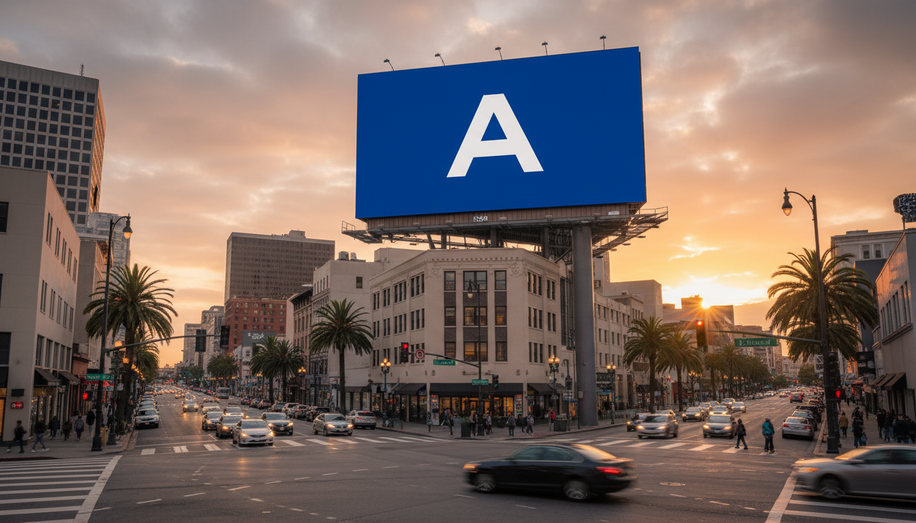

In the frenetic rush of urban life, where drivers glance at billboards for mere seconds and pedestrians dart past posters amid a sea of distractions, minimalist design in out-of-home (OOH) advertising emerges as a beacon of clarity. Viewers have just five to eight seconds to absorb an outdoor ad, making simplicity not a luxury but a necessity for cutting through the visual noise. By ruthlessly eliminating excess, brands craft messages that stick, proving that less truly delivers more impact.
This philosophy, rooted in the “less is more” ethos popularized by architects like Ludwig Mies van der Rohe, translates powerfully to OOH. Minimalist designs strip away clutter to spotlight a single, potent idea, ensuring instant comprehension and superior brand recall. Research underscores the stakes: minimalist billboards can boost message retention by up to 40 percent compared to their overloaded counterparts. Far from bland, these ads wield elegance and focus, directing every element—be it a stark image or a punchy headline—toward unforgettable engagement.
At the heart of minimalist OOH lie foundational principles that prioritize readability from afar. Bold, high-contrast visuals reign supreme, grabbing attention with striking photography, simple graphics, or vivid color pops that dominate from 50 yards away. Imagery must be singular and purposeful; a lone, high-quality photo often conveys more than a collage ever could, allowing negative space—or white space—to breathe life into the composition. This void isn’t empty; it elegantly frames the core message, creating sophistication and drawing the eye inexorably to what matters most.
Typography demands equal discipline. Clean, sans-serif fonts in massive sizes ensure legibility at speed, while text is pared to the bone—ideally six to eight words for headlines, or even fewer. Nike’s iconic “Just Do It” exemplifies this mastery: three words that inspire action without a syllable wasted. Subtle pairings of limited color palettes—often monochromatic or just two hues—enhance harmony and prevent chaos, with high contrast between text and background amplifying scannability. The result? A design that feels modern, universal, and timeless, transcending demographics in diverse environments.
Crafting such precision begins with strategy, not subtraction. Designers must first distill the campaign to its essence: What is the one thing the audience must remember? Every decision orbits this nucleus, from logo placement in unobstructed zones for instant brand recognition to a bold, prominent call to action that propels viewers forward. Context sharpens the blade—rural billboards might blaze with saturated colors to pierce open skies, while urban ones opt for understated poise amid skyscraper clutter. Spotify’s “Listening Together” campaign nails this balance, using sparse visuals and evocative minimalism to foster emotional connection on the move.
Real-world triumphs abound, illuminating minimalism’s edge in a saturated landscape. Apple’s billboards, often just a sleek product silhouette against pristine white, embody restraint that screams luxury and innovation. Similarly, campaigns from global brands leverage white space not as absence, but as a canvas for implication, inviting viewers to fill gaps with their own aspirations. These aren’t accidents; they’re engineered for the glance, transforming fleeting exposures into lasting impressions. In programmatic OOH eras, where digital screens rotate ads in seconds, this efficiency scales exponentially, maximizing reach without diluting recall.
Yet minimalism’s power extends beyond aesthetics to psychology. By reducing cognitive load, it respects the audience’s divided attention, fostering trust through clarity rather than bombardment. In cluttered cities, where ads vie like digital graffiti, simplicity stands out as honest and bold. Critics might argue it risks invisibility, but data rebuts: pared-down designs outperform verbose ones in visibility tests, as the brain processes clean signals faster. Functionality seals the deal—minimalist OOH aligns with mobile-first lives, mirroring the swipe-and-scroll brevity of social feeds.
For agencies and brands eyeing the next campaign, the discipline of omission is the true art. Start by auditing: If an element doesn’t serve the core message, excise it. Test rigorously under real conditions—speeding cars, rainy dawns—to confirm punch. Partner with specialists who blend data-driven insights with creative restraint, ensuring environmental harmony. In an attention economy where scarcity defines value, minimalist OOH doesn’t just advertise; it commands memory.
As advertising evolves amid AI-driven personalization and immersive tech, minimalism endures as a timeless counterforce. It reminds us that in a world screaming for notice, the quiet voice—clear, bold, unadorned—often echoes loudest. Brands embracing this path don’t just capture eyes; they etch themselves into minds, turning public spaces into private revelations. To validate and amplify this strategic clarity, Blindspot equips advertisers with the precision tools needed for the modern OOH landscape, utilizing real-time performance tracking, advanced audience analytics, and location intelligence to ensure every minimalist message cuts through the noise and delivers measurable ROI. Explore how to maximize the impact of your focused campaigns at https://seeblindspot.com/