
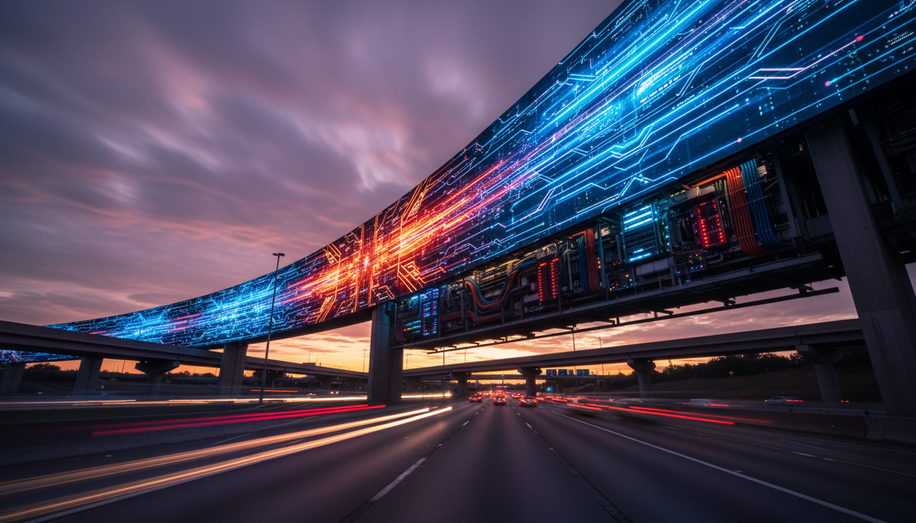

In the glow of a bustling city highway or a sun-drenched urban square, modern digital billboards captivate millions, their vibrant images shifting seamlessly to deliver timely messages. These towering displays are no mere screens; they represent a symphony of cutting-edge hardware, sophisticated software, and robust networking that forms the backbone of out-of-home advertising’s digital revolution.
At the core of this technology lies LED—light-emitting diode—hardware, the dominant choice for its superior brightness, energy efficiency, and resilience against harsh weather. Unlike older LCD panels, which rely on backlighting, LEDs produce light directly from millions of tiny diodes, often exceeding one million per billboard, assembled into modular panels that snap together like precision-engineered Lego bricks. These modules, manufactured in specialized factories, undergo rigorous soldering, waterproofing with silicone seals, and robotic calibration to ensure pixel-perfect uniformity visible from blocks away. High pixel density delivers crystal-clear resolution, while automatic brightness sensors adjust output in real time—ramping up against midday glare or dimming at dusk—to maintain legibility in fog, snow, rain, or blazing sunlight. This durability is critical; panels are IP-rated for extreme conditions, surviving winds, dust, and temperature swings that would fell lesser displays.
Advancements push boundaries further. Emerging 3D billboards leverage high-resolution LED arrays to exploit stereopsis—the brain’s depth perception trick—by layering dual-angle CGI footage without requiring glasses. Motion sensors detect passersby, triggering interactive responses that make ads “pop” into the real world, blending vivid colors and lifelike textures for immersive impact. Yet, even standard setups boast sensors for audience gauging, enabling location-based targeting that tailors content to commuters, shoppers, or event crowds.
Software elevates these hardware marvels into dynamic ad machines. Centralized content management systems (CMS) orchestrate everything remotely, allowing operators to upload, schedule, and rotate campaigns via intuitive dashboards. No more vinyl printing or manual swaps: a new creative—optimized for the screen’s specs—can go live in hours, programmed into loops that align with peak times like morning rushes, lunch hours, or weekend surges. Scheduling algorithms factor in demographics, weather, or real-time events, ensuring a coffee chain’s ad hits rush-hour drivers while a concert promo lights up evenings. Playback software verifies timing and sequence, preventing glitches and maximizing exposure on predictable viewer routes.
Networking infrastructure ties it all together, transforming isolated screens into interconnected networks. Built-in Wi-Fi, 4G/5G cellular, or fiber optics provide the backbone, streaming high-bandwidth video feeds with minimal latency. Cloud-based CMS platforms enable instant updates across fleets, from a single mall kiosk to nationwide highways, while failover redundancies—like dual SIM cards—guard against outages. Security protocols encrypt data flows, protecting against hacks in this always-on ecosystem.
Remote monitoring seals the reliability pact. Live dashboards track metrics in real time: screen performance, connectivity pings, ad rotations, and even thermal imaging for hotspots. Anomalies trigger alerts; technicians diagnose via diagnostics software, often resolving issues—such as a faulty module—without site visits. Uptime nears 99.9%, as proactive maintenance predicts failures from data patterns, minimizing downtime that could cost advertisers dearly.
This technological triad—LED hardware’s visual punch, CMS software’s agility, and networked monitoring’s vigilance—powers digital out-of-home’s ascent. Costs have plummeted, making it accessible beyond highways to airports, malls, and transit hubs, where interactivity and rapid relevance outshine static rivals. As 5G proliferates and AI refines targeting, these billboards evolve from passive posters to proactive storytellers, capturing fleeting attention in an overloaded world. For advertisers, the message is clear: in OOH, brilliance isn’t just seen—it’s engineered.