
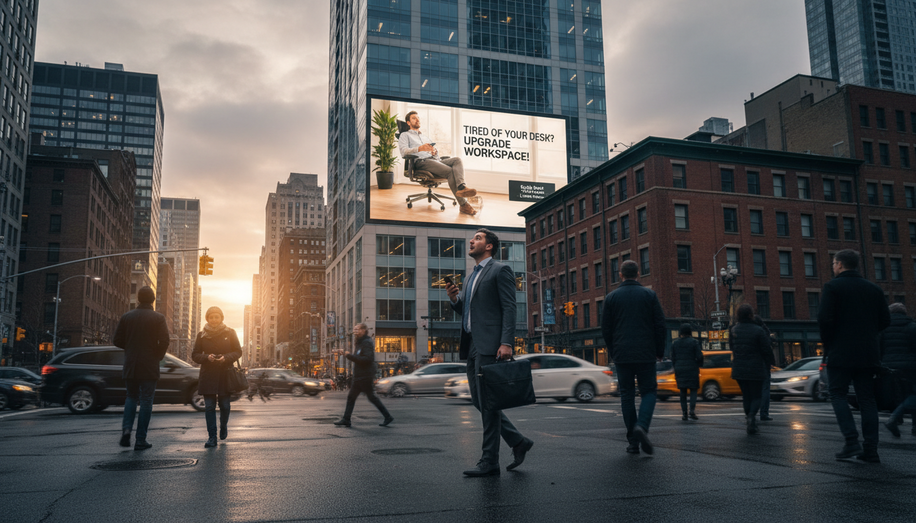

Digital out-of-home advertising has undergone a fundamental transformation through programmatic buying, shifting from static, one-size-fits-all campaigns to dynamic, audience-driven strategies that deliver messages precisely when and where they matter most. This evolution represents a critical turning point for brands seeking to maximize their real-world advertising impact in an increasingly fragmented media landscape.
The core distinction between traditional and programmatic DOOH lies in how decisions are made. Where conventional outdoor advertising relies on fixed placements and broad assumptions about who might see an ad, programmatic DOOH activates campaigns based on concrete signals: location data, time of day, weather conditions, mobility patterns, and contextual moments. This signal-based approach eliminates wasted exposure and aligns messaging with the actual circumstances in which audiences encounter brands in public spaces.
At its foundation, programmatic DOOH enables unprecedented precision in audience segmentation without relying on personal identifiers. Advertisers layer multiple data inputs—demographic information, behavioral segments, anonymized mobile device data, and first-party customer data—to identify which audiences are most likely present at specific locations during specific moments. Machine learning amplifies this capability, allowing platforms to predict audience movements and patterns, then continuously refine targeting based on campaign performance. A retailer promoting weekend sales, for instance, can target screens near shopping centers precisely during peak foot traffic hours, ensuring their message reaches shoppers when purchase intent is highest.
Contextual relevance represents another dimension of this targeting sophistication. Campaigns can respond dynamically to weather spikes, local events, traffic conditions, and even real-time sports scores. This means a beverage brand might promote cold drinks when temperatures spike, or a ride-sharing service could increase ad frequency during transit delays. Time-based criteria further refine delivery, allowing advertisers to daypart campaigns across morning, afternoon, and evening windows based on when their target audience is most receptive. The result is messaging that feels naturally aligned with the environment and moment, rather than intrusive or generic.
The performance implications are substantial. Research shows that campaigns combining contextual and audience-based DOOH activation drive 20 to 30 percent higher brand lift compared to static placements, while interactive and immersive formats deliver up to twice the recall of standard digital screens. When brands layer programmatic DOOH with complementary channels like mobile display, click-through rates increase approximately 15 percent compared to mobile display alone, with search lift typically appearing within 24 to 48 hours after concentrated outdoor bursts. These metrics reveal that physical exposure actively influences digital intent—DOOH operates not in isolation but as a reinforcement layer across the entire customer journey.
For advertisers, this precision translates to smarter budget allocation. Rather than purchasing guaranteed share of voice across an entire network, programmatic buyers can direct spending toward specific audiences and moments where ROI is demonstrably higher. This flexibility enables campaigns to reach 60 percent or more of key audiences in major urban areas within the first week, with daypart delivery varying up to 45 percent across peak times compared to static buys. Proof-of-play systems provide complete transparency, logging every ad impression with timestamp and location verification.
The privacy-safe nature of programmatic DOOH also addresses growing regulatory concerns. Targeting relies on aggregated audience signals and contextual data rather than individual tracking, maintaining relevance while respecting privacy boundaries. This distinction is increasingly important as regulatory frameworks tighten globally.
As brands navigate an advertising ecosystem defined by audience fragmentation and channel proliferation, programmatic DOOH offers a solution that bridges digital precision and real-world scale. By enabling dynamic segmentation based on who people are, where they are, and what moment they’re in, programmatic buying strategies transform outdoor screens from static assets into intelligent, responsive media that delivers the right message to the right audience at the exact right time. For publishers and advertisers alike, this represents not just an incremental improvement but a fundamental reimagining of how outdoor advertising creates value in an increasingly mobile and context-driven world.