
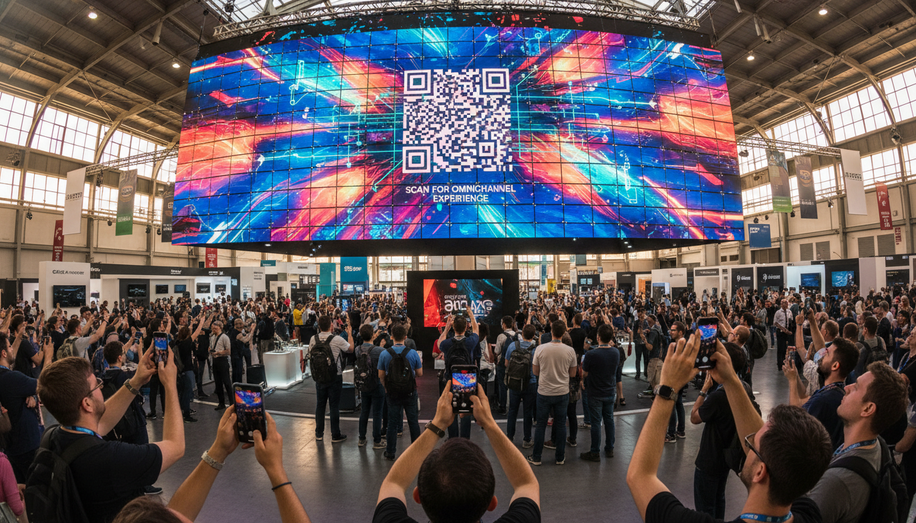

In an era where consumers navigate a labyrinth of screens and spaces, out-of-home (OOH) advertising emerges as the indispensable anchor in omnichannel strategies, forging connections that digital channels alone cannot replicate. Far from mere billboards or transit posters, OOH elevates the entire marketing mix by delivering tangible, real-world encounters that reinforce virtual narratives, drive measurable actions, and create a seamless brand experience across touchpoints. This integration transforms fragmented campaigns into cohesive symphonies, where physical presence amplifies digital precision and social buzz.
OOH’s power lies in its ability to extend reach and frequency beyond the confines of online algorithms, capturing audiences in their daily routines—commuters on buses, pedestrians at intersections, shoppers in high-traffic zones. These “captive” exposures build reinforcement through repetition, strengthening brand recognition and prompting post-exposure behaviors like app downloads or store visits. When layered with digital and social efforts, OOH ensures no demographic slips through the cracks; it reaches those underserved by targeted online ads, creating a broader, more sustained impact. A Facebook study underscored this synergy, finding that pairing OOH with social advertising boosted effectiveness by 13%, extending reach to younger audiences and accelerating objective achievement.
Seamless storytelling is at the heart of this elevation, with OOH serving as the physical bridge between virtual and tangible worlds. Imagine a retail campaign where a striking digital out-of-home (DOOH) screen in a mall displays a QR code linking to an e-commerce flash sale, while synchronized social media posts urge users to “scan now” with the same creative visuals. This continuity crafts a narrative that unfolds across channels: a billboard sparks curiosity during a commute, Instagram reels nurture interest, and connected TV reinforces the call to action. Brands like fast-food chains exemplify this by pairing location-targeted bus shelter ads with nearby digital promotions, driving urgency and foot traffic within a 1-3 kilometer radius. The result? A holistic experience that feels omnipresent yet personal, transcending screens to embed the brand in consumers’ physical realities.
Modern OOH, particularly DOOH, shatters the myth of isolation through advanced integrations like QR codes, NFC tags, augmented reality, and geo-fencing. These tools propel audiences from offline exposure to online engagement instantly—a vanity URL on a transit wrap leads to a tailored app offer, or a hashtag on a billboard fuels user-generated content on social platforms. Retargeting takes this further: device ID passback from DOOH impressions enables follow-up on mobile, CTV, display, and audio, guiding consumers toward conversion with precision. Viant highlights syncing DOOH with mobile activations to reconnect exposed audiences, while e-commerce links turn outdoor views into online carts. Data flows both ways, too; location-based analytics provide insights into behavior, preferences, and campaign lift, informing the broader omnichannel playbook.
The proof is in the performance metrics. A Harris Poll survey for the Out of Home Advertising Association of America (OAAA) revealed that 73% of consumers view DOOH favorably, with nearly 50% taking action post-exposure—visiting websites, searching online, or purchasing. Another OAAA finding showed 76% of recent DOOH viewers acted similarly, underscoring OOH’s lower-funnel potency when integrated. For retail and food brands, this manifests as spiked store traffic from directional cues like “turn right in 500m,” amplified by omnichannel reinforcement. Programmatic advancements in 2025 further revolutionize this, enabling AI-driven personalization and real-time adjustments that align DOOH dynamically with social, CTV, and retail strategies.
Critically, OOH demands strategic planning to maximize its omnichannel role. Consistent audience targeting across platforms ensures messaging harmony, while unified data analytics enable personalized retargeting and informed tweaks. Experimentation is key: test QR-driven discounts alongside influencer-tied creatives, or geo-fenced mobile ads post-billboard exposure, refining based on cross-channel insights. Mobile optimization bridges gaps, making every touchpoint responsive, from email captures to app interactions.
Ultimately, OOH does not just drive traffic; it orchestrates a high-impact brand ecosystem where physical audacity meets digital agility. In 2026’s crowded media landscape, brands ignoring this medium risk invisibility amid the digital din. Those embracing it—leveraging its scalability, creativity, and geographic punch—unlock unprecedented visibility, engagement, and loyalty. As consumer paths blur online and offline, OOH stands as the vital thread weaving them into unbreakable brand experiences.