
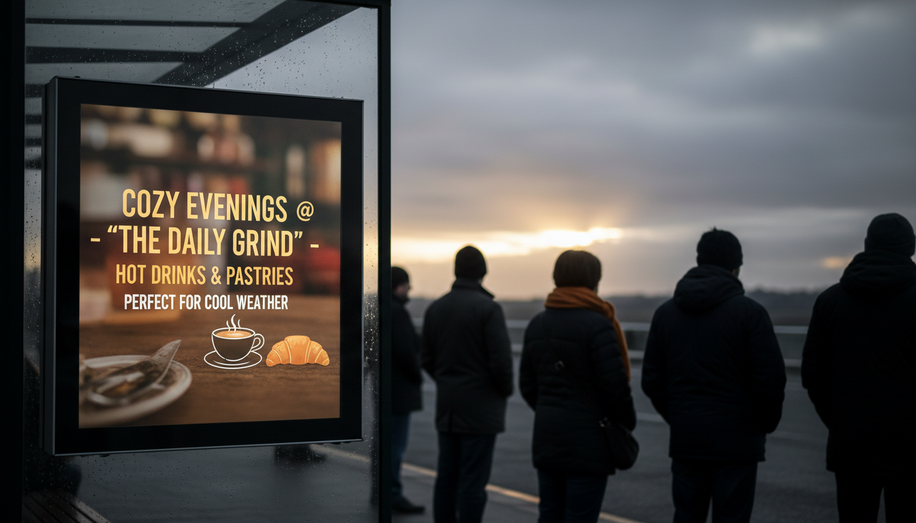

In the bustling heart of a city square, a massive digital billboard flickers to life, its message shifting seamlessly from a sun-soaked beach promotion to a cozy hot chocolate ad as dark clouds roll in. This is Dynamic Creative Optimization (DCO) in action for Digital Out-of-Home (DOOH) advertising, a technology that harnesses real-time data to deliver hyper-relevant content on the world’s largest screens. No longer confined to static images, DOOH campaigns now adapt instantaneously to weather, time of day, audience demographics, and local events, transforming billboards into responsive storytellers that capture attention and drive results.
At its core, DCO updates ad creatives in real time based on predefined triggers and live data signals, evolving static formats into personalized experiences. Programmatic DOOH platforms integrate machine learning, AI, and automation to manage this process at scale, using real-time bidding to optimize delivery across diverse screen sizes, locations, and placements. Advertisers upload creative assets—modular templates with interchangeable elements like headlines, images, and calls to action—then set rules for data inputs such as footfall patterns, traffic data, or commuter behaviors. The system then automates the rest, serving the most contextually fitting version to the right audience without manual intervention.
Weather emerges as one of the most potent triggers, allowing ads to mirror the moment’s mood. A retail brand might promote umbrellas during a sudden downpour or ice cream on a sweltering afternoon, with platforms pulling live meteorological data to swap visuals and messaging on the fly. Perion, a key player in programmatic DOOH, exemplifies this by personalizing promotions based on nearby store locations or environmental conditions, ensuring every impression maximizes relevance and boosts engagement rates. Similarly, Displayce integrates factors like temperature or traffic to modify ads dynamically, creating hyper-relevant content that resonates deeply and enhances interactions.
Time of day adds another layer of precision, enabling campaigns to align with daily rhythms. A restaurant chain could toggle between lunch specials for midday crowds and dinner invitations as evening falls, using clock-based logic to adjust creatives without pausing the campaign. This “if-this-then-that” approach, common in DOOH digital signal processors (DSPs), pulls in live feeds for elements like current temperature or sports scores, upgrading from rigid static buys to fluid, responsive storytelling. Broadsign notes that such dynamic responses to temporal cues streamline production by eliminating the need for scenario-specific assets, reducing overhead while enabling sequenced narratives across locations.
Audience demographics and local events take personalization further, leveraging first- and third-party data for surgical targeting. Footfall sensors detect commuter surges, prompting peak-hour optimizations for transit ads that adapt to audience profiles like professionals or families. At airports, flight delays detected via live data might trigger higher bids for airline promotions on nearby screens, capitalizing on surges in foot traffic. Event-driven DCO shines during happenings like sports matches, where ads incorporate live scores, crowd sizes, or match odds to heighten excitement—think a beer brand cheering a home-team goal on stadium-adjacent billboards. Screenverse highlights how DCO aggregates such inputs for real-time A/B testing, cross-referencing engagement metrics mid-campaign to refine what works best.
The advantages ripple through efficiency, engagement, and ROI. By automating creative production and delivery, DCO cuts timelines—agencies report halving launch times with collaborative preview tools that enable in-flight updates sans re-approvals. This agility lowers costs, frees creative teams from endless revisions, and fosters client trust through transparent, measurable impact. Precision targeting minimizes waste, with dynamic ads outperforming static ones in capturing fleeting out-of-home attention. The Drum observes that DCO unlocks novel creative possibilities by optimizing for real-world contexts, blending technology with storytelling for deeper connections.
Real-world examples underscore the impact. British Airways’ “Magic of Flying” campaign used audience insights and live triggers to morph DOOH creatives in real time, drawing eyes with tailored wonder. Enroute View Media’s event-targeting demos show dynamic ads reacting to crowd dynamics or weather at festivals, far surpassing fixed displays. As programmatic ecosystems mature, DCO’s integration of diverse data streams— from environmental APIs to demographic overlays—positions DOOH as a leader in relevance-driven advertising.
Yet, success hinges on strategic setup: identifying triggers, configuring rules within supply-side platforms (SSPs), and ensuring seamless data flows. Marketers must balance creativity with automation, testing variants to hone performance continuously. Looking ahead, as AI refines predictive capabilities, DCO promises even smarter adaptations, like anticipating traffic jams or event hype before they peak.
In an era of fragmented attention, DCO equips DOOH to deliver not just visibility, but visceral relevance on the big screen—proving that the most effective ads are those that feel made for the moment.