
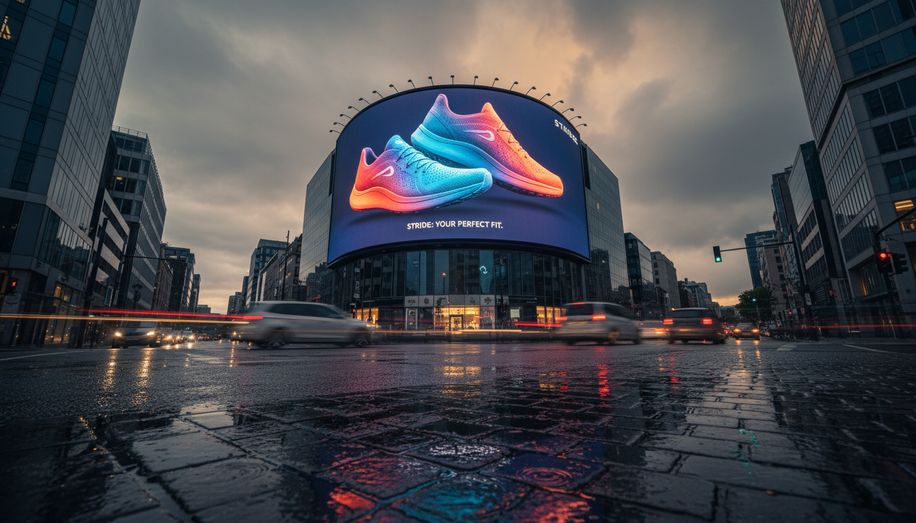

Out-of-home advertising has long operated under a fundamental constraint: the inability to precisely target specific audiences at scale. Billboards and transit ads reached broad populations, with effectiveness measured largely through impressions and awareness rather than genuine audience alignment. Artificial intelligence is fundamentally changing this equation, enabling advertisers to move beyond traditional demographic targeting toward sophisticated, real-time audience segmentation that responds to location, behavior, context, and even momentary circumstances.
The evolution represents a seismic shift in how OOH campaigns function. Where demographic data once provided the primary targeting mechanism, AI systems now analyze vast streams of real-time information—geolocation services, mobile device signals, social media patterns, weather conditions, traffic flows, and contextual events—to create dynamic audience profiles. This capability allows media operators to deliver the right message to the right person at the right moment, a level of precision that seemed impossible just years ago.
Consider the practical implications. A transportation company could display different messaging to commuters during peak versus off-peak hours. A retailer could adjust creative content based on foot traffic patterns in surrounding areas. A luxury brand could target its messaging differently depending on whether affluent professionals or budget-conscious consumers are likely to be exposed to a particular screen at a given time. These aren’t hypothetical scenarios—they’re already happening.
The Kia electric vehicle campaign illustrates this transformation in action. Rather than displaying the same advertisement to all viewers, Kia’s team deployed vehicle recognition technology at EV charging stations to identify what type of car was currently charging. When a non-Kia vehicle pulled in, the digital display highlighted the EV9’s advantages, particularly its three-row seating compared to competitor offerings. When a Kia vehicle arrived, the messaging shifted to congratulate owners and introduce them to the latest electric model. The result: an 8% sales increase driven directly by intelligent, context-aware audience segmentation.
This capability extends beyond immediate behavioral data. AI systems can now layer historical campaign information with advertiser first-party data, social media insights, and even satellite imagery to understand not just who might see an ad, but the physical environment in which they’ll see it. Street-view imagery can reveal obstructed sightlines; historical data can identify which messages resonated with which audience segments; weather information can trigger relevant creative variations. The medium has transformed from static to genuinely dynamic.
Another example reinforces this evolution: PODS, a container company, deployed a dynamic billboard that generated over 6,000 distinct messages through hyperlocal AI-driven marketing. Rather than displaying one advertisement to all passersby, the system created thousands of variations tailored to specific geographic areas and audiences, driving a 60% increase in website visits. This represents the complete inversion of traditional OOH advertising’s broad-reach philosophy.
What makes this transition particularly powerful is the integration with broader marketing ecosystems. Audiences exposed to OOH campaigns can now be retargeted across social media, connected television, and search platforms. Conversely, data about where target audiences physically congregate can inform OOH placement strategy. This omnichannel integration transforms OOH from a standalone awareness channel into a critical connective node within comprehensive marketing campaigns.
The measurement capabilities have evolved correspondingly. Traditional OOH advertising struggled to demonstrate ROI beyond impressions. Modern AI systems employ facial recognition and gaze-tracking technology to determine not just how many people saw an ad, but who they were, how long they engaged, and whether they took subsequent action. Advanced analytics can now link OOH exposure to measurable outcomes including foot traffic, website visits, and actual conversions. This data foundation enables continuous optimization, allowing marketers to identify what’s working and adjust campaigns in real time.
This transformation does more than improve targeting efficiency. It fundamentally expands OOH’s strategic role within marketing portfolios. By moving beyond demographic assumptions toward behavior-driven, context-aware segmentation, AI enables OOH to deliver personalized messaging at scale—something that seemed paradoxical just five years ago. The medium that once epitomized broad-reach awareness is becoming one of the most precisely targeted channels available, creating unprecedented opportunities for brands willing to embrace data-driven outdoor advertising.
For brands looking to harness this transformative power, platforms like Blindspot offer the essential infrastructure. By leveraging advanced location intelligence, programmatic DOOH campaign management, and robust ROI measurement and attribution, Blindspot empowers advertisers to execute dynamically targeted campaigns and precisely understand audience engagement and conversion, turning OOH into a fully integrated, high-performing channel within the modern marketing ecosystem. Explore these capabilities at https://seeblindspot.com/